









In the rapidly evolving field of artificial intelligence, the comparison of machine learning vs deep learning reveals two pivotal technologies that stand out. While both fall under the umbrella of AI, enabling systems to learn from data without explicit programming, deep learning is actually a specialized subset of machine learning that leverages multi-layered neural networks to process complex patterns.
This distinction allows DL to excel in tasks requiring vast datasets and intricate computations, such as image recognition or natural language processing, whereas traditional ML often suffices for simpler, structured data scenarios.
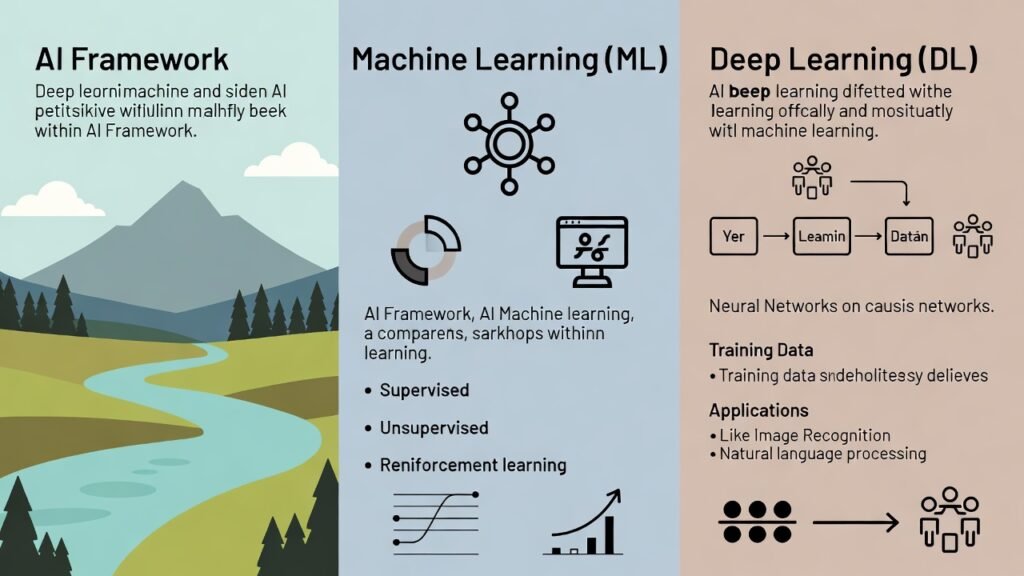
In this comprehensive guide, we’ll break down their workflows, highlight real-world examples like personalized recommendations on platforms such as Netflix and Amazon, and delve into emerging trends that could reshape industries by 2026 and beyond. For deeper insights into related advancements, explore our articles on generative AI and quantum computing’s role in AI.
What is Machine Learning?
Machine learning is a subset of artificial intelligence that enables systems to learn and make decisions from data patterns. Unlike traditional programming, where rules are hardcoded, ML algorithms improve through experience. This makes it versatile for tasks like forecasting and classification.
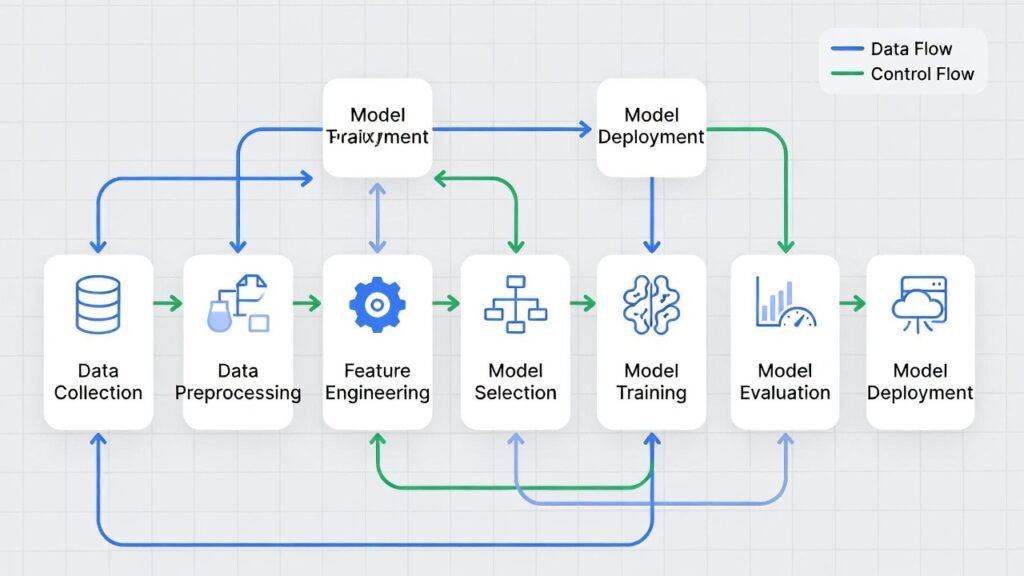
How Machine Learning Works
ML involves feeding data into algorithms, which then build models to predict outcomes. The process includes data collection, preprocessing, model training, evaluation, and deployment. Key to this is feature engineering, where relevant data attributes are selected to enhance accuracy.
Common Machine Learning Algorithms
Popular machine learning algorithms include:
- Linear Regression: For predicting continuous values, like house prices.
- Decision Trees: For classification tasks, such as identifying spam emails.
- Support Vector Machines (SVM): Effective for high-dimensional data separation.
- K-Nearest Neighbors (KNN): A simple algorithm for classification based on similarity.
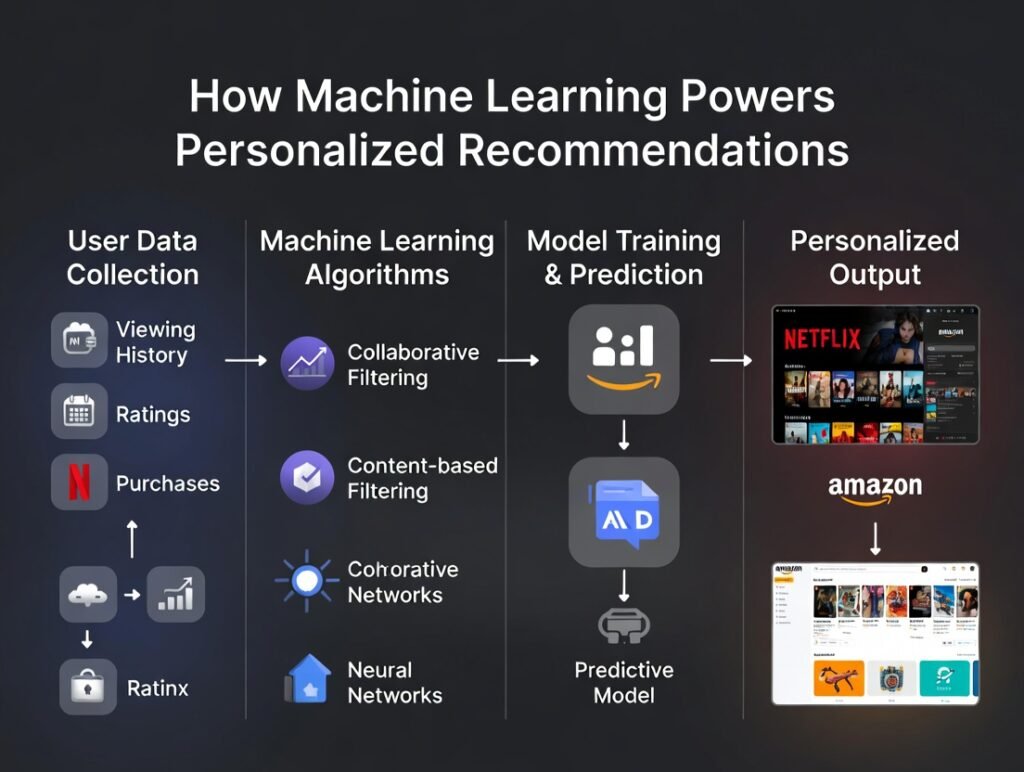
Machine learning examples abound in everyday life, from recommendation engines on streaming platforms to fraud detection in banking. For instance, Netflix uses ML to suggest shows based on viewing history.
What is Deep Learning?
Deep learning is a specialized branch of machine learning that employs artificial neural networks with multiple layers—hence “deep”—to analyze data. Inspired by the brain’s neurons, DL models automatically extract features from raw data, making them powerful for complex problems.
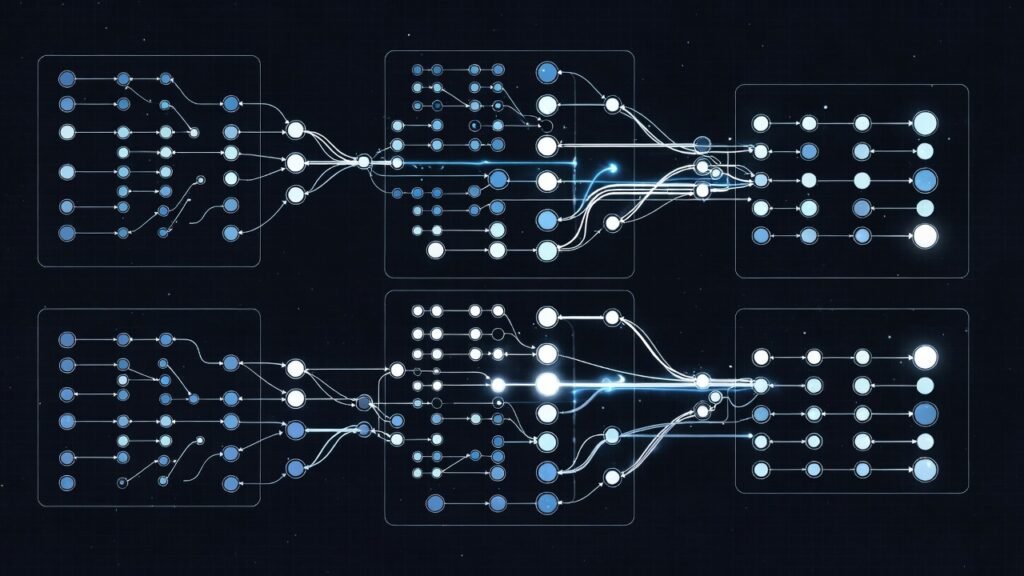
How Deep Learning Works
DL architectures consist of input layers, hidden layers (where learning occurs), and output layers. Training involves forward propagation of data and backpropagation to adjust weights, minimizing errors. This requires significant computational power, often using GPUs.
Types of Neural Networks
Common types include:
- Convolutional Neural Networks (CNNs): Ideal for image and video processing.
- Recurrent Neural Networks (RNNs): Suited for sequential data like time series or text.
- Generative Adversarial Networks (GANs): Used for creating realistic synthetic data.
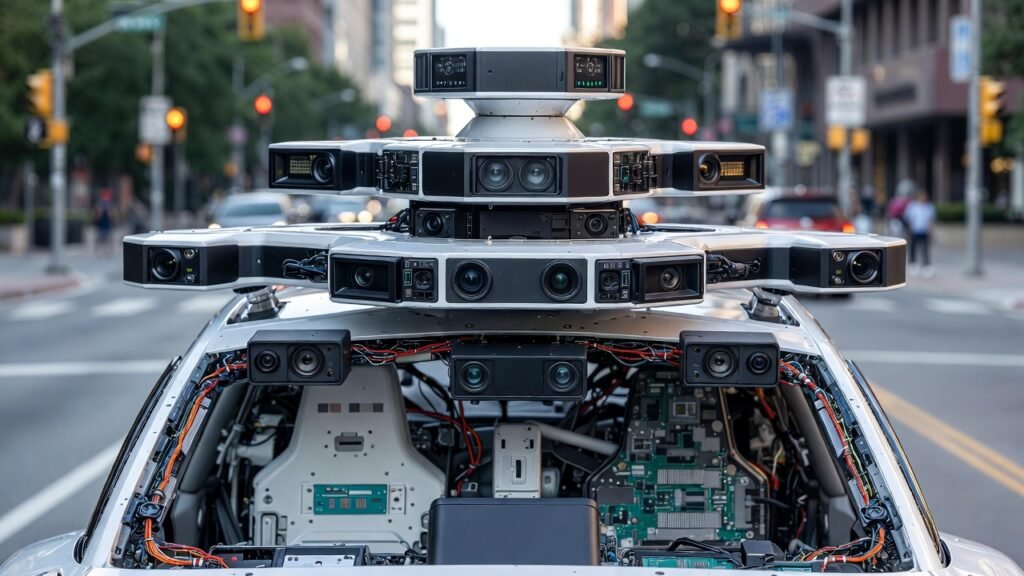
Deep learning applications include voice assistants like Siri and image recognition in autonomous vehicles. For example, Tesla’s Autopilot relies on DL to interpret road scenes in real-time.
Key Differences Between Machine Learning and Deep Learning
The core difference between machine learning and deep learning lies in their approach to data and complexity. Here’s a detailed comparison:
| Aspect | Machine Learning (ML) | Deep Learning (DL) |
|---|---|---|
| Definition | Algorithms that learn from structured data to make predictions | Subset of ML using multi-layered neural networks for complex patterns |
| Data Requirements | Effective with smaller, structured datasets | Thrives on large volumes of unstructured data |
| Human Intervention | Requires manual feature engineering | Automatically learns features from data |
| Hardware Needs | Can run on standard CPUs | Demands GPUs or TPUs for efficient training |
| Training Time | Generally faster | Longer due to network depth and data size |
| Accuracy | Suitable for simpler tasks with good accuracy | Achieves higher accuracy on complex, unstructured data |
| Examples | Credit scoring in finance | Facial recognition in security systems |
ML is more interpretable and cost-effective for straightforward problems, while DL shines in scenarios like natural language processing. As per statistics, deep learning markets are expected to grow from $34 billion in 2025 to $279.6 billion by 2032.
When to Use ML vs DL
Opt for machine learning when data is limited or interpretability is key. Choose deep learning for tasks involving big data, such as speech recognition, where automation of feature extraction is beneficial.
Applications and Real-World Examples
Both technologies have transformative applications, but their strengths differ.
- Machine Learning Applications:
- Healthcare: Predictive analytics for patient outcomes.
- Finance: Algorithmic trading and risk assessment.
- E-commerce: Personalized product recommendations.
- Deep Learning Applications:
- Automotive: Self-driving cars using computer vision.
- Entertainment: Content generation with models like DALL-E.
- Medicine: Analyzing medical images for disease detection.
Overlaps exist, such as in chatbots where ML handles basic queries and DL powers advanced conversations. Real-world machine learning examples include Amazon’s product suggestions, while deep learning drives Google’s search improvements.
Pros and Cons
Machine Learning
- Pros: Faster training, lower computational costs, easier to interpret.
- Cons: Limited with unstructured data, requires expert feature selection.
Deep Learning
- Pros: High accuracy on complex tasks, automatic feature learning.
- Cons: Data-intensive, expensive hardware, black-box nature.
A balanced view of pros and cons of deep learning highlights its edge in accuracy but notes the higher entry barriers.
Future Trends in ML and DL

In 2026 and beyond, trends include agentic AI, where systems act autonomously, and multimodal models handling text, images, and audio. Smaller, efficient models for edge computing are rising, reducing reliance on cloud resources. Explainable AI will address interpretability issues, while generative AI continues to expand, projected to reach $442.07 billion by 2031. Hybrid approaches combining ML and DL will dominate, enhancing reliability in critical sectors.
Faqs related Machine Learning vs. Deep Learning
What is the main difference between machine learning and deep learning?
Machine learning uses algorithms to learn from data, often requiring feature engineering, while deep learning employs neural networks to automatically extract features from large datasets.
Is deep learning better than machine learning?
Not always; deep learning excels in complex, unstructured data tasks but requires more resources. Machine learning is better for simpler, interpretable models.
What are some machine learning examples in daily life?
Examples include spam filters in email, personalized ads on social media, and predictive text on smartphones.
What are deep learning applications?
Applications range from image recognition in apps like Google Photos to natural language processing in virtual assistants like Alexa.
How does deep learning differ from machine learning in terms of hardware?
Deep learning typically needs powerful GPUs for training large models, whereas machine learning can often run on standard hardware.
When to use machine learning vs deep learning?
Use ML for smaller datasets and faster results; opt for DL when dealing with vast, complex data like videos or audio.
What is the future of ML and DL in AI?
Trends point to integration with agentic systems, edge AI, and ethical considerations, driving growth in hybrid models.
Final Thoughts
In summary, the difference between machine learning and deep learning centers on depth, data needs, and application scope. ML offers accessibility for many tasks, while DL provides superior performance for advanced challenges.
As AI evolves, understanding ML vs DL will help you leverage the right tool. Explore resources like TensorFlow for DL or scikit-learn for ML to get started. Whether for business or personal projects, these technologies promise exciting advancements.