



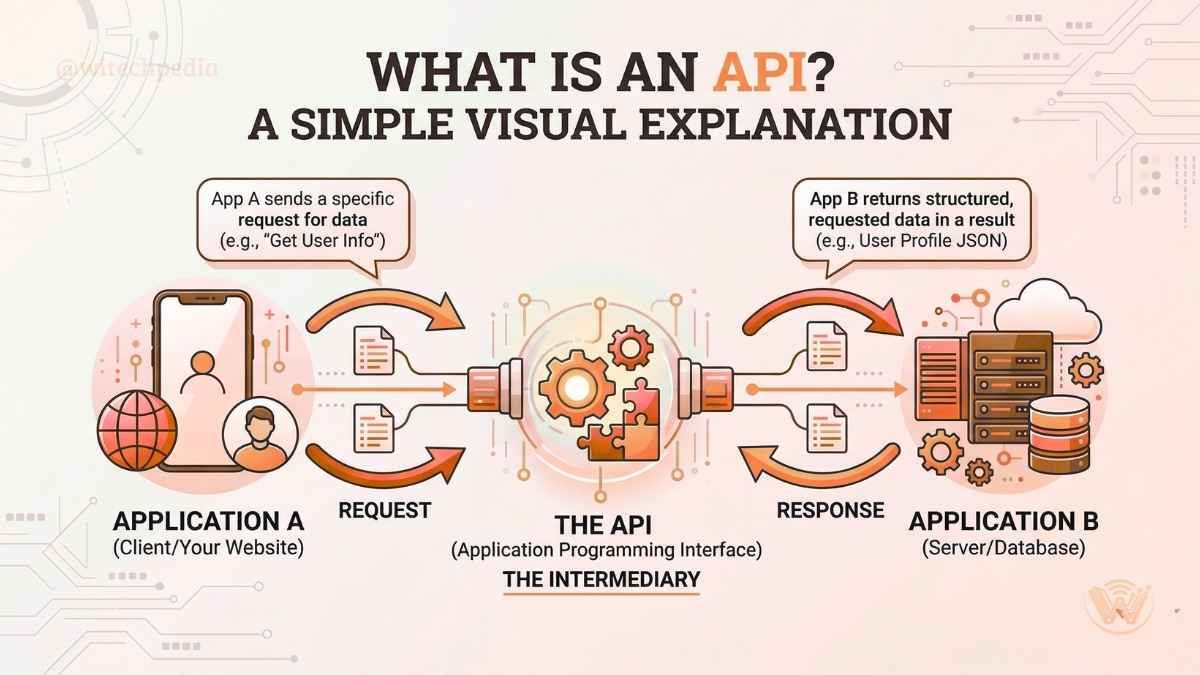
What is an API? (Application Programming Interface) Explained Simply

Confused by the term API? Learn what an Application Programming Interface is, how it works like a digital waiter, and why your business website needs one to scale.
Antonio Partha
Antonio Partha
Hi, I'm Antonio Partha Dolui, a full-stack developer with 6+ years of experience in web development and SEO optimization. I specialize in helping startups and small...
6 Min Read

What is API? Developers use an API to let different software applications talk to each other. An API works as a messenger that sends requests and delivers responses between programs. This simple connection powers almost every modern app and website you use today.

At WiTechPedia, we explain technical topics in clear and simple language. This complete guide will help you understand the API definition, how APIs work, different types of APIs, real examples, and best practices.

What Does API Stand For?

API stands for Application Programming Interface. It is a set of rules and protocols that allows one software application to access the features or data of another application. Developers create APIs so they do not need to rewrite code that already exists.

How Does an API Work?

APIs work through a clear request-and-response system. Here is the exact process:
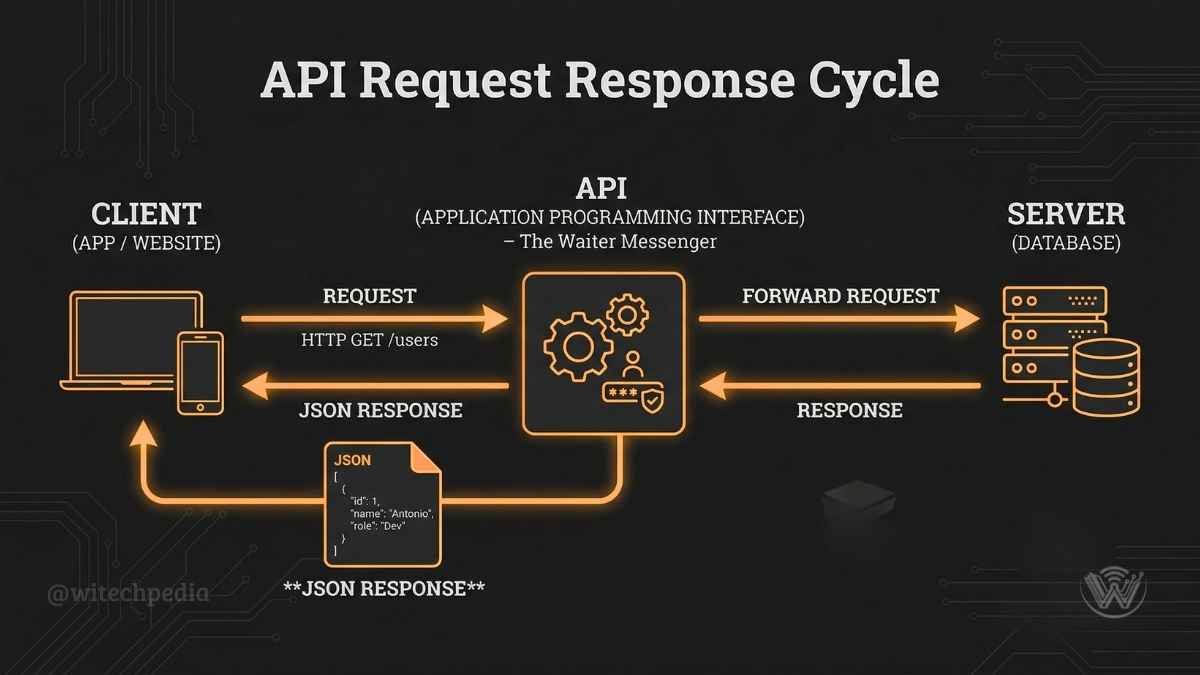
What Is Api Request And Response Cycle Diagram
How An Api Works – Request And Response Flow
  • The client application sends a request to the API.
  • The API receives the request at a specific endpoint.
  • The server processes the request and performs the required action.
  • The server sends back a structured response, usually in JSON format.

This entire cycle happens in fractions of a second. As a result, users enjoy fast and smooth experiences across different applications.

Types of APIs

Developers use several main types of APIs depending on their needs:
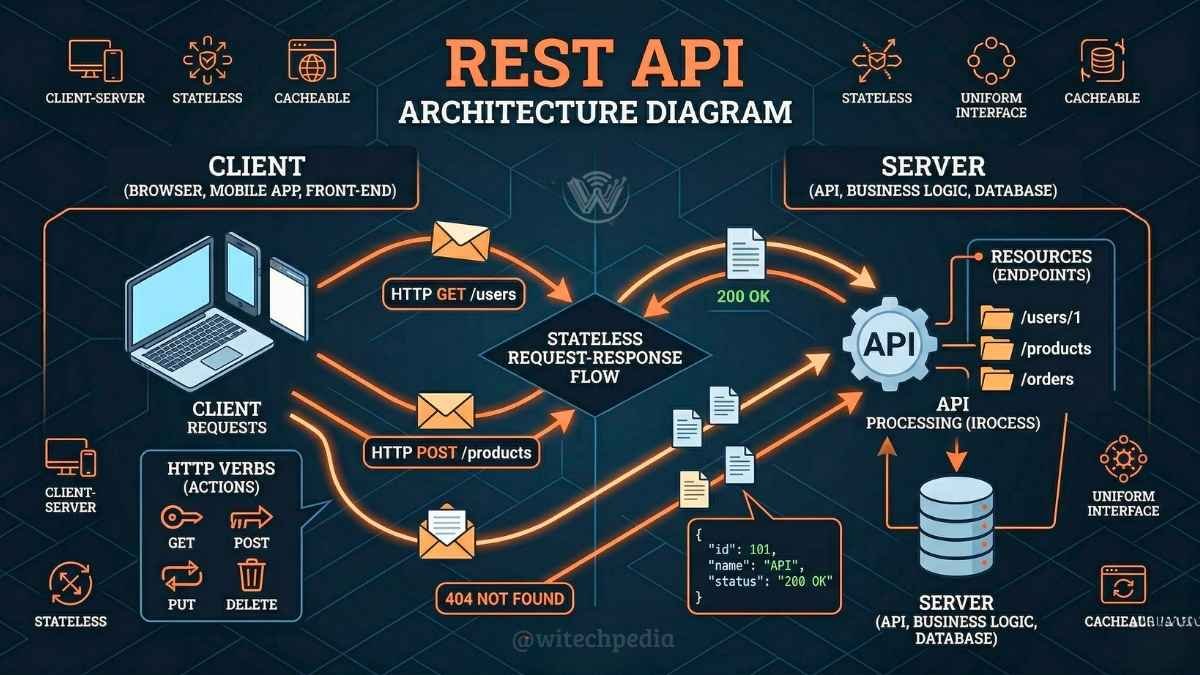
What Is Rest Api Architecture And How It Works
Rest Api Architecture – Most Popular Type Of Api
  • REST APIs: These are the most popular type today. They use standard HTTP methods and deliver data in simple JSON format.
  • SOAP APIs: Large organizations prefer SOAP APIs for their strong security features and XML-based structure.
  • GraphQL APIs: Developers choose GraphQL when they want to fetch only the exact data they need in one request.
  • Web APIs: These APIs work over the internet and power most online services.

Real-World Examples of APIs

Many popular services use APIs every day. Here are some practical examples:
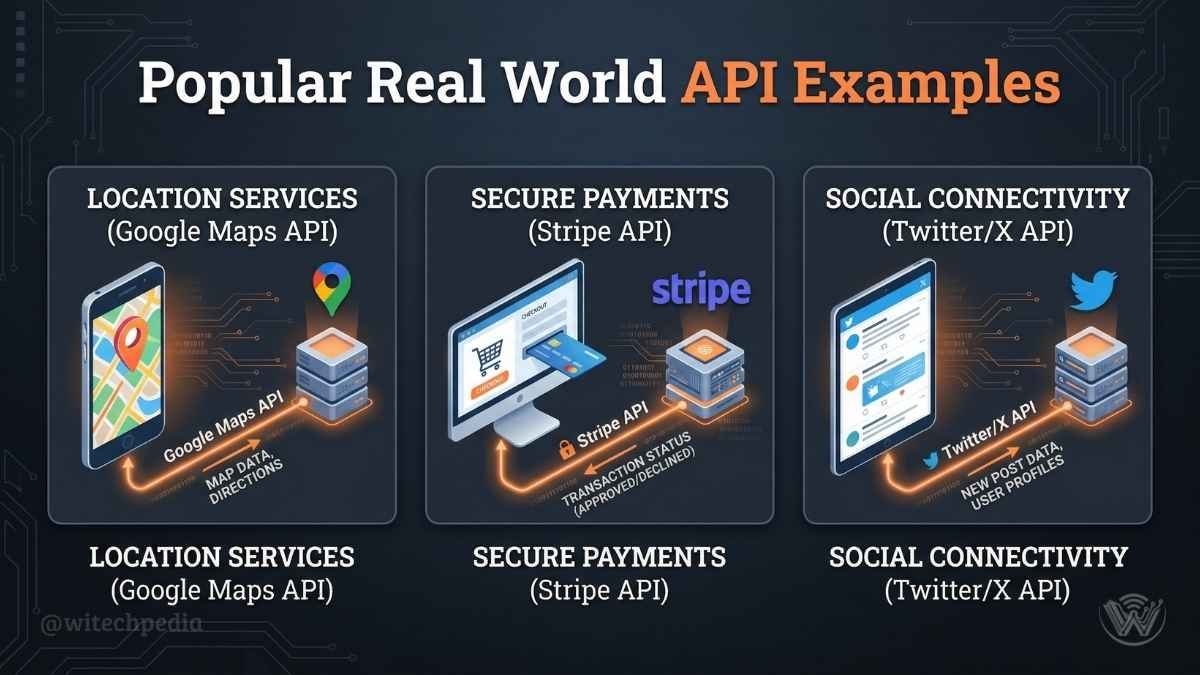
What Is Api Real World Examples Google Maps Stripe Twitter
Popular Real-World Examples Of Apis
  • Google Maps API – Developers add maps and location features to their websites and apps. Official Google Maps API
  • Stripe API – Companies integrate secure payment processing easily. Stripe API Documentation
  • OpenWeatherMap API – Apps show real-time weather data to users.
  • X (Twitter) API – Applications fetch tweets and user information in real time.
  • Instagram Graph API – Businesses manage posts and analytics through automated tools.

These examples clearly show why understanding what is API matters for every developer and business.

Benefits of Using APIs

Teams that use APIs gain many clear advantages:
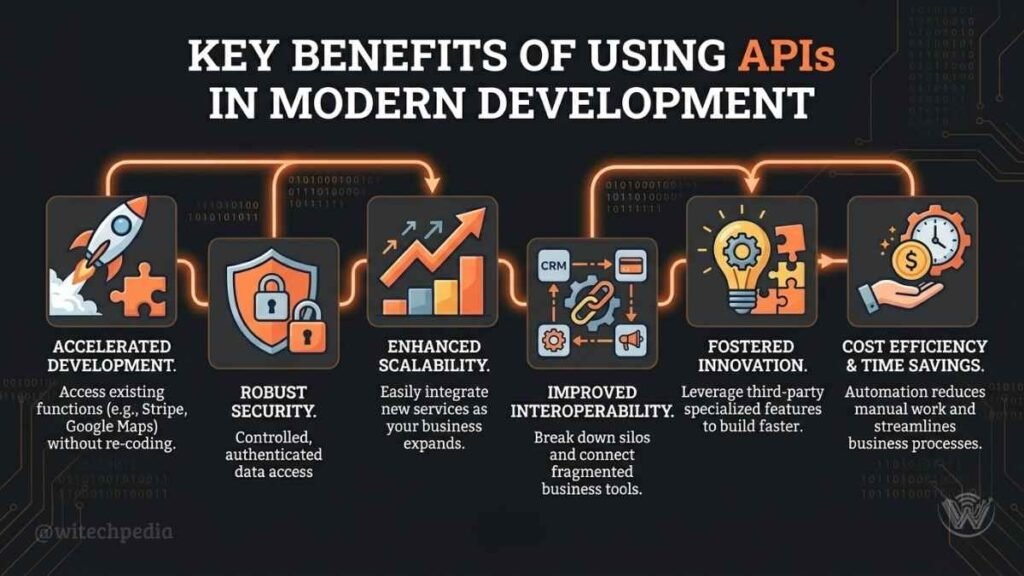
Benefits Of Api In Software Development What Is Api
Key Benefits Of Using Apis In Modern Development
  • They build applications faster by reusing existing services.
  • They create scalable and flexible systems.
  • They maintain better security through controlled access.
  • They reduce development costs significantly.
  • They open new business opportunities through third-party integrations.

API Best Practices

Follow these essential practices to create strong APIs:

  • Write clear and complete documentation.
  • Implement proper authentication and rate limiting.
  • Version your APIs to prevent breaking changes.
  • Monitor performance and errors regularly.
  • Test APIs thoroughly before going live.

Frequently Asked Questions (FAQ) About APIs

What is API in simple terms?

An API is a set of rules that allows different software programs to communicate and share data with each other securely.

What is the difference between REST and SOAP APIs?

REST APIs are lightweight, fast, and use JSON. SOAP APIs are more secure, structured, and mainly used in enterprise environments.

Do I need to know coding to use APIs?

Basic coding knowledge helps, but many tools like Postman allow beginners to test and use APIs easily.

Are APIs free to use?

Many APIs offer free tiers. Popular services like Google Maps and Stripe provide free usage up to certain limits.

How can I start learning APIs?

Start with public APIs and practice using tools like Postman. Follow our API for Beginners tutorial series.

Final Thoughts

You now have a clear understanding of what is API, how it works, its types, and why it plays a vital role in modern technology. APIs connect the digital world and drive innovation across industries.

Next Steps:

Bookmark this page for quick reference. Share it with students, developers, or colleagues who want to learn about APIs.

Subscribe to the WiTechPedia Newsletter and receive fresh, well-explained technology guides directly in your inbox every week.

WiTechPedia – Making Technology Simple and Accessible for Everyone.

Share This Article

Follow @WiTechPedia on Social Media

Ready to Scale Your Business with Proven Digital Strategies?

Elevate your business with reliable website development services, digital marketing services, SEO services, and expert ads management services. Our Kolkata-based team is ready to support your growth with customized, high-performance digital solutions.

Follow:
Hi, I'm Antonio Partha Dolui, a full-stack developer with 6+ years of experience in web development and SEO optimization. I specialize in helping startups and small businesses overcome slow load times, poor rankings, and outdated tech stacks — and achieve top 3 Google positions and 3x faster website performance.
Leave a Comment

Leave a Reply