






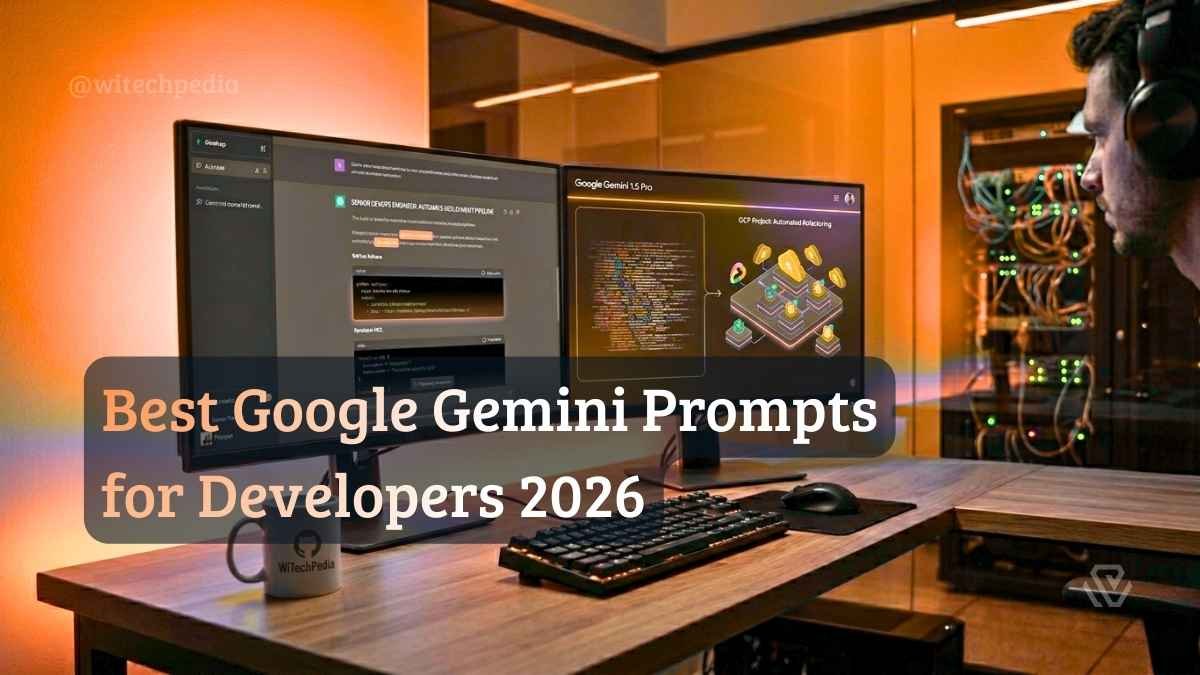
Stop treating Google Gemini like just another basic text chatbot. If you are only using it to write emails or generate generic code snippets, you are drastically underutilizing one of the most powerful tools in the modern tech stack. Before diving into complex workflows, if you are new to AI architectures, brush up on how generative AI actually works to understand what makes these models tick.
Unlike other large language models that heavily tax your local hardware (often requiring specific setups like those detailed in our Windows 11 26H1 architecture wiki), Gemini processes its massive workload in the cloud. It was built from the ground up to be natively multimodal and boasts an unprecedented context window.
This guide bypasses the generic advice and provides the absolute best Google Gemini prompts tailored specifically for full-stack developers, cloud architects, and power users who want to automate their advanced workflows.
Exploiting the Massive Context Window (Gemini 1.5 Pro)
The biggest advantage Gemini holds over its competitors is its ability to process over 1.5 million tokens. This allows you to use Google Gemini advanced prompts to ingest entire codebases or 500-page API documentation PDFs in a single prompt.
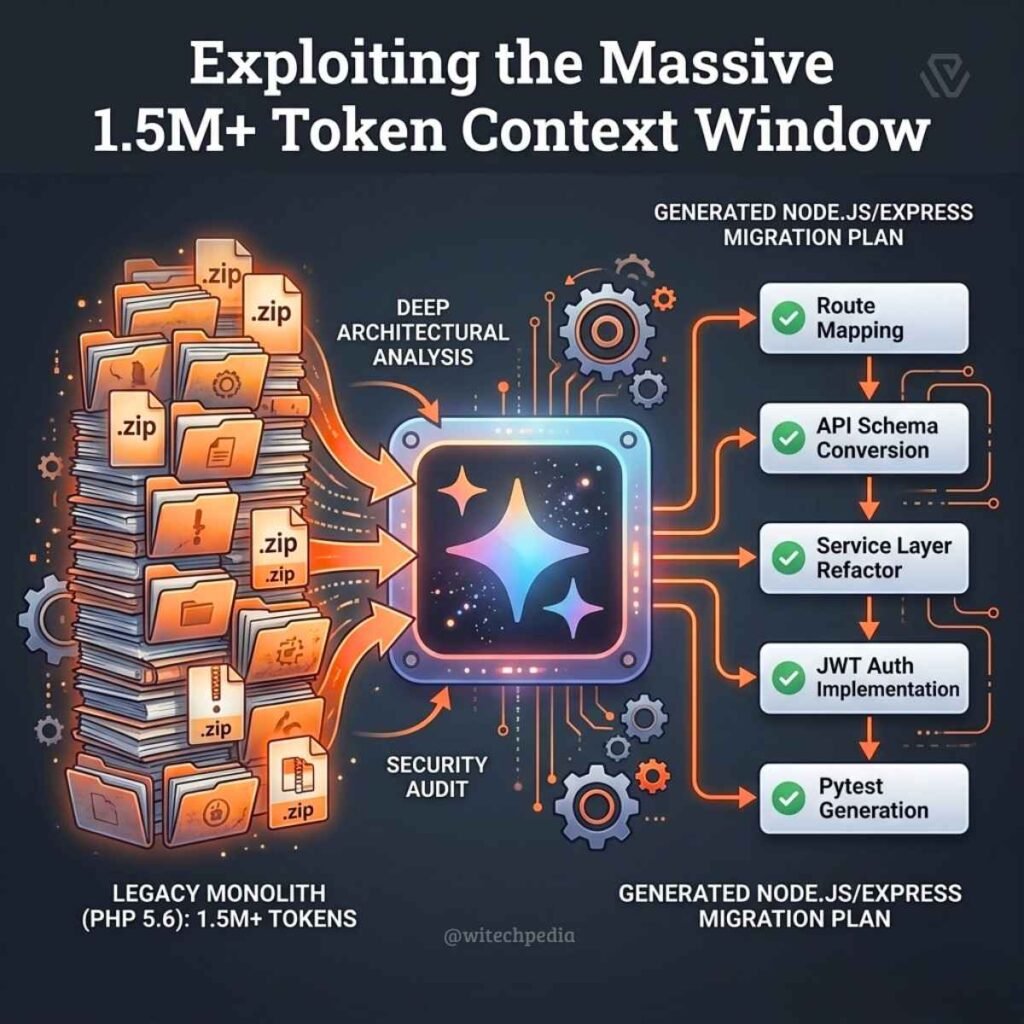
1. The Legacy Codebase Translator
Here is how you analyze a codebase with Gemini 1.5 Pro without breaking it into tiny, disjointed chunks.
Prompt:
"I have attached a .zip file containing an entire legacy PHP application, including the routing files, controllers, and models. Act as a Senior Full-Stack Developer. First, map out the entire routing structure and document the database schema relationships. Second, write a comprehensive, step-by-step migration plan to convert this backend to a modern Node.js/Express architecture. Highlight any deprecated cryptographic functions that pose a security risk."
2. The Log File Detective
Prompt:
"I am uploading a 50MB .log file from our production server spanning the last 48 hours. Act as a Site Reliability Engineer. Scan the entire file to pinpoint the exact timestamp when the 'Out of Memory' (OOM) leak began. Identify the specific microservice or API endpoint that triggered the cascading failure and suggest a fix."
The Multimodal Mastermind (Image & Video to Code)
Gemini’s native vision capabilities are industry-leading. Here is how to use Gemini for UI to code and diagram analysis using Gemini multimodal prompts.
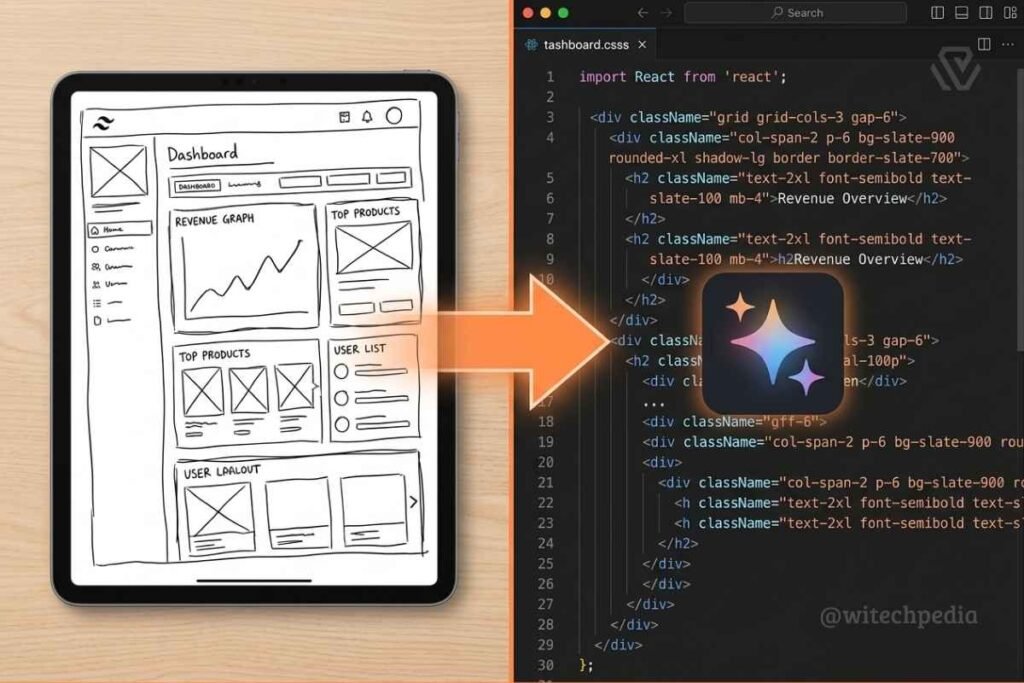
1. The UI/UX to React Converter
Whether you are building for the web or designing native desktop apps (check out our macOS technical encyclopedia for Apple’s specific UI paradigms), Gemini can translate visuals into code.
Prompt:
"I am uploading a wireframe sketch of a SaaS dashboard. Act as a Senior Frontend Developer. Analyze the spatial layout, typography hierarchy, and UI elements. Generate the React components and Tailwind CSS code to recreate this layout exactly. Ensure the design is fully mobile-responsive and extract the color palette used in the image."2. The Architecture Diagram Analyzer
Always validate the generated HCL syntax against the Official Terraform Provider for Google Cloud before running terraform apply.
Prompt:
"I have attached an image of a cloud network architecture diagram. Act as a Cloud DevOps Engineer. Identify all the infrastructure components (e.g., Load Balancers, EC2/Compute Engine instances, VPC subnets, and Databases) and their connections. Write a complete Terraform script (main.tf) to provision this exact architecture. Add inline comments explaining the routing logic."Best Google Gemini Prompts for Coding & Debugging
While Gemini is great at ingestion, you must tailor your instructions to get highly optimized output. These are the best Gemini prompts for developers.
1. The Test-Driven Development (TDD) Partner
Prompt:
"Here is a complex Python function that processes financial transactions. Act as a Lead QA Engineer. Write a comprehensive suite of Pytest unit tests for this function. You must cover all edge cases, null inputs, negative values, and expected TypeErrors. Format the output as a single, copy-pasteable test file."
2. The Android Studio (Jetpack Compose) Refactor
Gemini is natively integrated directly into Android Studio. Use it to modernize legacy mobile code.
Prompt:
"Act as an Expert Android Developer. Convert this legacy XML-based layout and its associated Java Activity into a modern, reactive Kotlin Jetpack Compose function. Ensure state is hoisted correctly using ViewModel, and apply Material Design 3 spacing and typography guidelines."
Google Workspace Automation (Apps Script Magic)
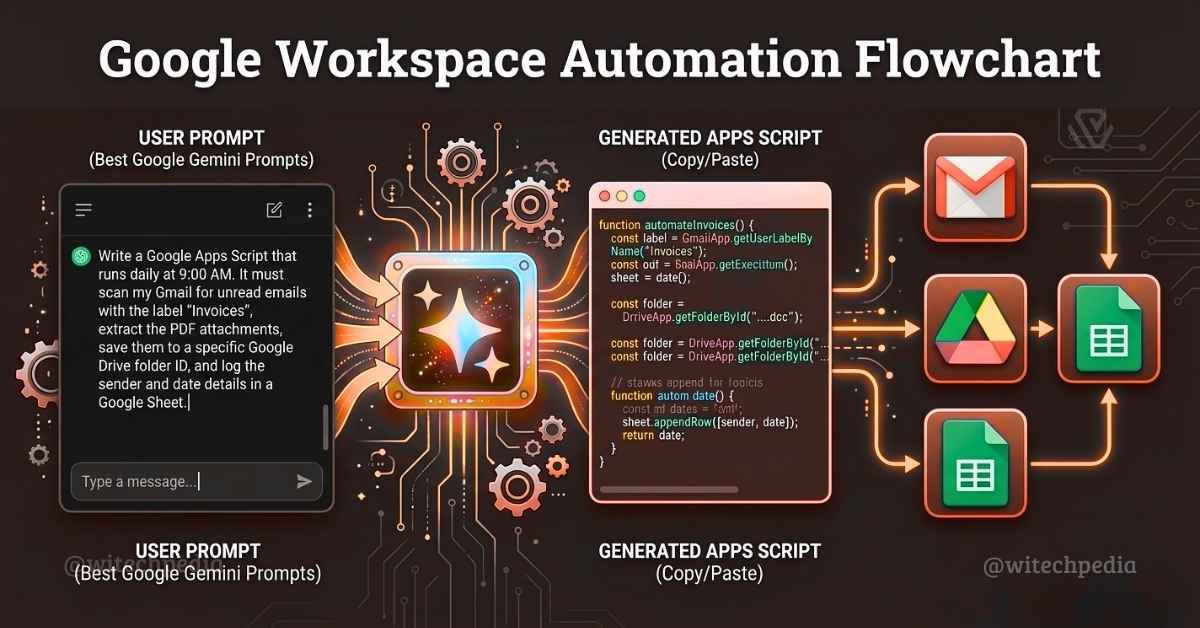
Because Gemini is built by Google, it possesses an unmatched, native understanding of the Google Workspace ecosystem. Use these best Google Gemini prompts for apps script generator to maximize Gemini workspace automation.
The Automated Inbox & Drive Organizer
Prompt:
"Act as a Google Workspace Automation Expert. Write a complete Google Apps Script that runs daily at 9:00 AM. The script must:

1. Scan my Gmail for unread emails with the label 'Invoices'.
2. Extract any PDF attachments from those emails.
3. Save the PDFs to a specific Google Drive folder ID [INSERT_FOLDER_ID].
4. Log the sender's email, date received, and file name in a new row on a Google Sheet with the ID [INSERT_SHEET_ID]. Provide the exact steps on how to deploy this script and set up the time-driven trigger."
Google Cloud & Vertex AI Prompt Engineering
If you are operating within Google Cloud Platform (GCP), Gemini is natively trained on GCP’s documentation. Note: Whenever accessing sensitive cloud environments remotely, always ensure your connection is secured (see our roundup of the Best Free VPNs in 2026 for safe remote access).
1. The GCP IAM Policy Auditor
Prompt:
"Act as a Google Cloud Security Architect. Review the attached JSON IAM policy for my GCP production environment. Identify any overly permissive roles, specifically looking for privilege escalation risks or accounts with unnecessary iam.serviceAccounts.actAs permissions. Rewrite the JSON file applying the strict Principle of Least Privilege."
2. The BigQuery SQL Optimizer
Prompt:
"Act as a Data Engineer. I have a BigQuery SQL script that joins three massive tables (transactions, users, and product_inventory) and is currently taking too long to execute and consuming too many compute slots. Rewrite this query to optimize for performance and cost. Implement table partitioning, clustering, and materialized views where applicable."
Gemini vs. ChatGPT: When to Use Which?
To maximize your workflow, you need to know which AI model fits the task:
Frequently Asked Questions (FAQ)
Can Gemini analyze whole GitHub repositories?
Yes. With Gemini 1.5 Pro’s massive context window, you can package an entire repository into a .zip file or a single text payload and upload it directly. It can map dependencies, explain routing logic, and suggest sweeping refactors across dozens of interconnected files simultaneously.
Are my prompts used to train Google’s models?
If you are using the free, consumer version of Gemini, Google may use your conversations for model training (unless you explicitly turn off Gemini Apps Activity). However, if you are using Gemini Enterprise, Gemini for Google Workspace, or Vertex AI, Google’s enterprise privacy commitments guarantee that your code, prompts, and proprietary data are never used to train their base models.
Final Thoughts
The power of an AI model is entirely dependent on the quality of the instructions it receives. By integrating these best Google Gemini prompts into your daily development and cloud management routines, you transition from a casual AI user to a high-velocity engineer.
How are you currently integrating Gemini into your tech stack? Let us know in the comments below, or subscribe to the WiTechPedia newsletter for more enterprise-grade AI automation strategies!