









People who use a dedicated budgeting app save an average of $600 in their first two months. That’s not a marketing claim — that’s the measured result from YNAB’s own user data, the most loyal user base in personal finance software. The hard truth? Most people who struggle with money don’t have a discipline problem. They have a visibility problem. The right best app for budgeting puts your entire financial picture on one screen — and suddenly, the decisions get easier.
- Why Your Choice of Budgeting App Actually Matters
- The Best App for Budgeting in 2026: Quick Comparison
- The 9 Best Budgeting Apps, Reviewed
- How to Choose the Best App for Budgeting for Your Situation
- Are These Budgeting Apps Safe to Use?
- FAQ: Best App for Budgeting
- The Bottom Line: Take Control of Your Money in 2026
This guide cuts straight to what matters. We tested nine leading budgeting apps across five categories: expense tracking, goal setting, automation, UI design, and real-world value for the price. Whether you’re a first-time budgeter, a couple managing joint finances, or someone on a serious debt payoff mission — there’s a tool here built for exactly how you think about money.
Why Your Choice of Budgeting App Actually Matters
Not all budgeting apps are built the same. In 2026, the market has split cleanly into two philosophies:
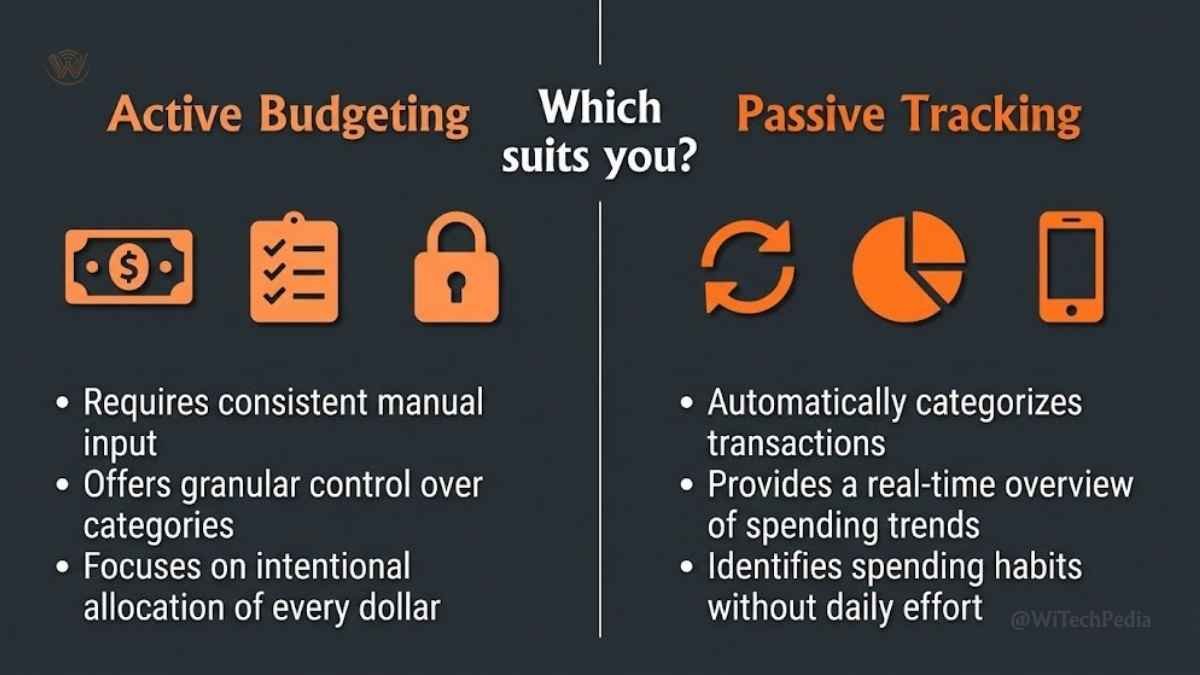
- Active budgeting — You assign every dollar a purpose before you spend it (zero-based budgeting method).
- Passive tracking — The app auto-categorizes your spending and you review it afterward.
Neither approach is wrong. But using an app built for the wrong philosophy is why most people quit theirs within a month. Matching an app to your money personality is the single most important factor in whether it sticks.
The Best App for Budgeting in 2026: Quick Comparison
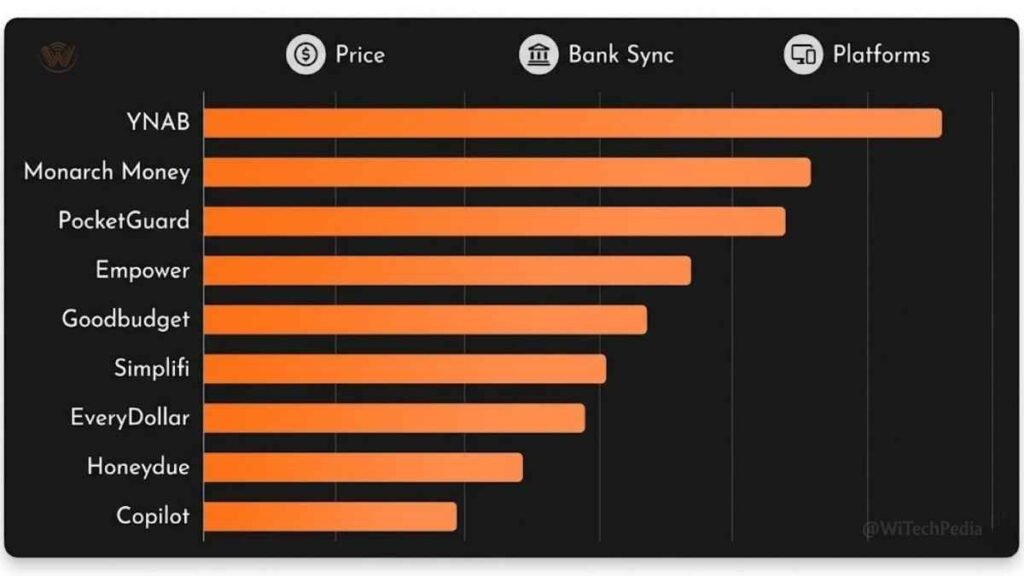
| App | Best For | Price | Bank Sync | Platforms |
|---|---|---|---|---|
| YNAB | Zero-based budgeting | $109/year | ✅ Yes | iOS, Android, Web |
| Monarch Money | Flexible, all-in-one | $14.99/month | ✅ Yes | iOS, Android, Web |
| PocketGuard | Spending snapshot | Free / $12.99/month | ✅ Yes | iOS, Android |
| Empower | Wealth + spending tracking | Free | ✅ Yes | iOS, Android, Web |
| Goodbudget | Envelope budgeting | Free / $10/month | ❌ Manual | iOS, Android |
| Quicken Simplifi | Custom categories | $2.99/month | ✅ Yes | iOS, Android, Web |
| EveryDollar | Simple zero-based | Free / Premium | ✅ Premium only | iOS, Android, Web |
| Honeydue | Couples budgeting | Free | ✅ Yes | iOS, Android |
| Copilot Money | AI autocategorization | $13.99/month | ✅ Yes | iOS, Mac |
The 9 Best Budgeting Apps, Reviewed
1. YNAB — Best Overall for the Best App for Budgeting
If you’re serious about transforming your finances, YNAB (You Need A Budget) is the gold standard. It follows a strict zero-based budgeting framework: every dollar you earn gets assigned a job before you spend it.
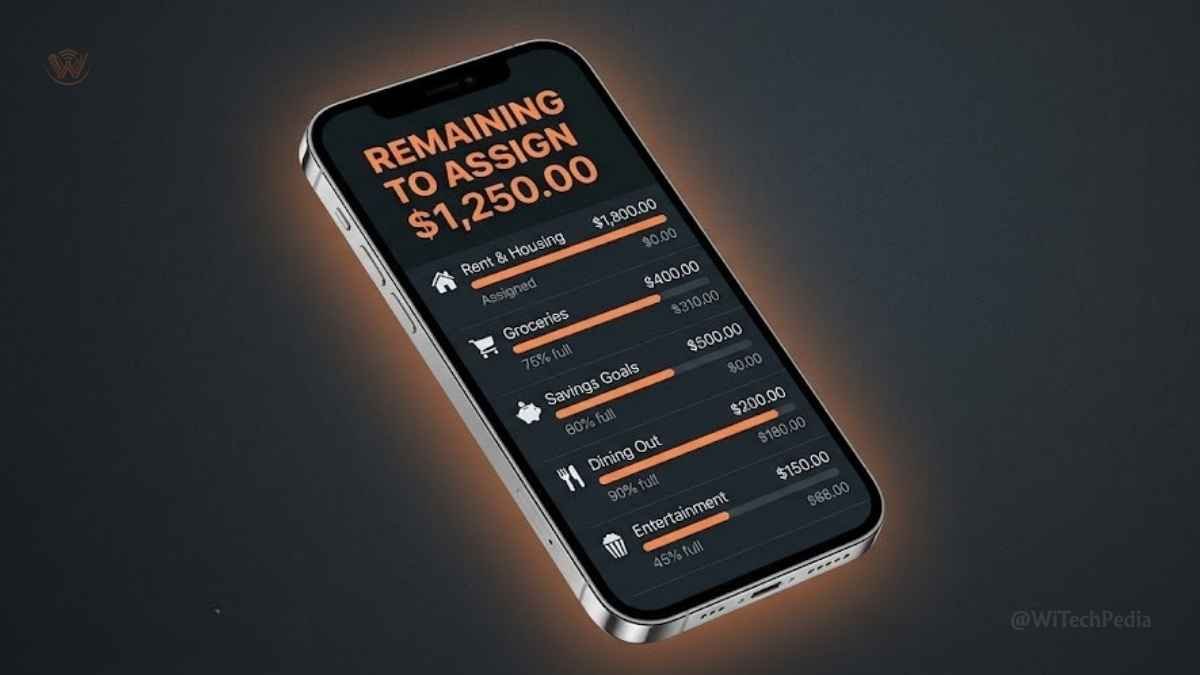
What makes it different: YNAB isn’t a passive tracker. It demands engagement. You sit down, look at what you earned, and deliberately allocate money to rent, groceries, savings, and a night out. Nothing floats in a vague “miscellaneous” category.
Real-world results: YNAB users report saving over $6,000 in their first year on average. The 12-month retention rate of 75% is the highest in the category — a telling sign that the app delivers results people want to repeat.
Best for:
- People committed to changing their relationship with money
- Anyone trying to eliminate debt aggressively
- Users who want structured financial accountability
Pricing: $14.99/month or $109/year. A 34-day free trial is available with no credit card required.
Pro Tips
YNAB has a dedicated learning library and live workshops. If you’re new to zero-based budgeting, use their free onboarding resources before starting.
2. Monarch Money — Best All-In-One Personal Finance App
Monarch Money emerged as the fan favorite after Mint shut down in 2024, and for good reason. It combines flexible budgeting, investment tracking, and collaborative tools for couples into a single polished dashboard.
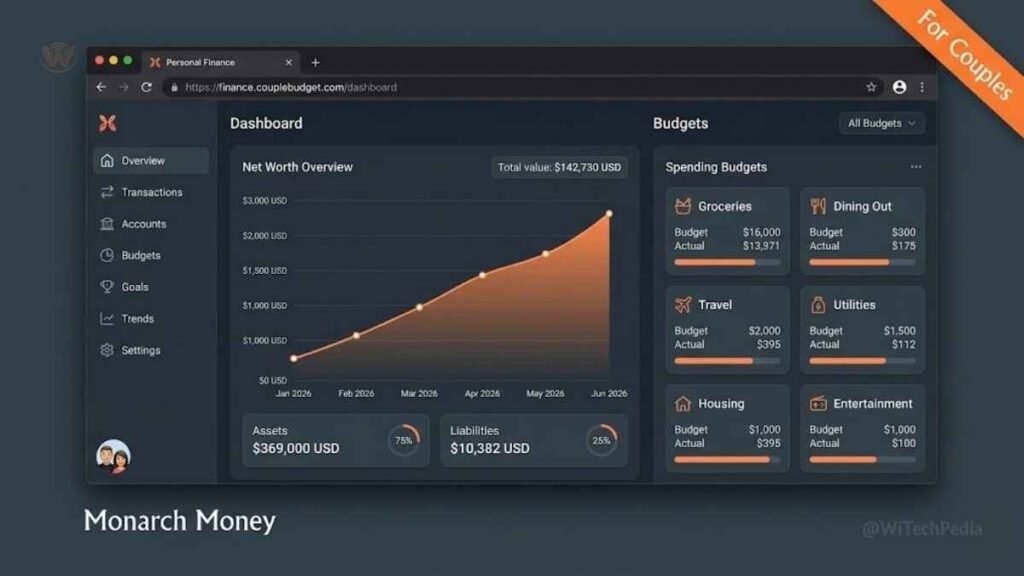
What makes it different: Unlike most budgeting apps that force you into a specific method, Monarch Money is methodology-agnostic. You can track spending passively, set custom budgets, plan goals, and monitor net worth — all under one roof.
Real-world use case: A freelancer with irregular income can use Monarch’s custom budget rollover feature to balance lean months against productive ones. A couple can share access and split visibility across joint and personal accounts.
Best for:
- Users who want flexibility without committing to a strict budgeting philosophy
- Couples managing shared and individual finances
- Anyone who switched from Mint and wants a true upgrade
Pricing: $14.99/month or $99.99/year.
3. PocketGuard — Best for a Clear Spending Snapshot
Sometimes you don’t need a complex system. You need one number: how much can I safely spend today? PocketGuard answers that question front and center.

What makes it different: The app’s signature “In My Pocket” feature calculates your spendable balance in real time — subtracting bills, savings goals, and necessities from your income. No mental math required.
Real-world use case: Ideal for people who overspend because they don’t know how much is “safe” to spend on any given day. PocketGuard’s visual limit removes the guesswork.
Best for:
- Beginners who find detailed budgeting overwhelming
- People who want passive, real-time spending awareness
- Users who need a quick financial temperature check
Pricing: Free tier available. PocketGuard Plus is $12.99/month or $74.99/year.
4. Empower Personal Dashboard — Best Free Option for Wealth Tracking
Empower (formerly Personal Capital) is the rare app that combines everyday budgeting with full investment portfolio analysis — at no cost.
What makes it different: Most budgeting apps ignore your 401(k), IRA, and brokerage accounts. Empower connects everything, giving you a true net worth view alongside your daily spending.
Tools included for free:
- Portfolio analysis and fee analyzer
- Retirement planner
- Net worth and savings tracker
- Debt paydown planner
- Emergency fund tracker
NerdWallet named it “Best budget app for tracking wealth and spending” in January 2026.
Best for:
- Investors who want spending and portfolio visibility in one place
- Users with multiple financial accounts wanting a unified dashboard
- Anyone who wants powerful tools without a monthly subscription
Pricing: Completely free for personal finance tools.
5. Goodbudget — Best for the Envelope Method
Goodbudget digitizes the classic cash envelope system — the technique where you physically put cash into labeled envelopes for each spending category. When the envelope is empty, spending stops.
What makes it different: Goodbudget is one of the few apps that doesn’t require bank syncing. You manually log transactions, which forces intentional awareness of every purchase.
Real-world use case: A family trying to eliminate overspending on groceries and dining can create strict digital envelopes for each. The manual entry process creates a psychological friction that passive trackers simply don’t.
Best for:
- Cash-based or envelope method budgeters
- People who prefer privacy (no bank connection required)
- Couples who want a shared budgeting system on separate devices
Pricing: Free (20 envelopes, 1 account). Goodbudget Plus is $10/month or $80/year.
6. Quicken Simplifi — Best for Custom Budget Categories
Quicken Simplifi offers the most sophisticated category customization of any app in this list. You can build a three-level category hierarchy with unlimited custom subcategories and automated transaction rules.
What makes it different: Most apps assign you a fixed set of spending categories. Simplifi lets you restructure everything to match how you actually think about your money. Its Spending Plan adapts dynamically as expenses change.
New in 2026: Quicken released LifeHub, a secure digital vault for important financial documents at $1.99/month — a useful companion for anyone going paperless.
Best for:
- Detail-oriented budgeters who want granular spending data
- Small business owners tracking mixed personal/professional expenses
- Users frustrated by generic category systems in other apps
Pricing: $2.99/month, billed annually.
7. EveryDollar — Best for Simple Zero-Based Budgeting
Designed by personal finance personality Dave Ramsey’s Ramsey Solutions, EveryDollar is a clean, no-nonsense zero-based budgeting app for users who don’t need—or want—complexity.
What’s new in 2026: EveryDollar relaunched in January 2026 with a “margin finder” that identifies extra breathing room in your budget, personalized daily lessons, and live group coaching.
What makes it different: The free version uses a fully manual entry system, which many users find builds discipline faster than automatic syncing. The premium version adds bank connection, custom reports, and personalized habit analysis.
Best for:
- Dave Ramsey followers using the Baby Steps financial plan
- Beginners who want zero-based budgeting without YNAB’s learning curve
- Users who prefer structured, guided budgeting with coaching support
Pricing: Free (manual entry). Premium pricing varies; bank sync requires paid plan.
8. Honeydue — Best Free App for Couples
Honeydue was built specifically for couples — and it shows. The app lets partners connect all their accounts, choose what to share, and track joint finances without surrendering financial privacy.
What makes it different: Each partner controls their own visibility settings. You can show balances to each other, hide individual accounts, or share everything. Monthly bill reminders and a built-in chat system reduce the friction of money conversations.
Best for:
- Couples splitting bills or managing joint accounts
- Partners with mixed financial transparency preferences
- Newlyweds combining finances for the first time
Pricing: Free.
9. Copilot Money — Best for AI-Powered Autocategorization
Copilot Money is the most design-forward budgeting app available in 2026, and it’s the strongest choice for users who want automation driven by machine learning rather than manual rules.
What makes it different: Copilot’s AI learns your spending patterns and categorizes transactions with impressive accuracy over time. The app also offers a clean Mac desktop app alongside iOS — a rare combination.
Best for:
- Apple ecosystem users who want a native Mac experience
- Tech-forward users who prefer AI-driven financial insights
- Anyone tired of manually correcting miscategorized transactions
Pricing: $13.99/month or $106.99/year. A 30-day free trial is available.
⚠️ Note: Copilot Money is iOS and Mac only. Android users should consider Monarch Money as a full-featured alternative.
How to Choose the Best App for Budgeting for Your Situation
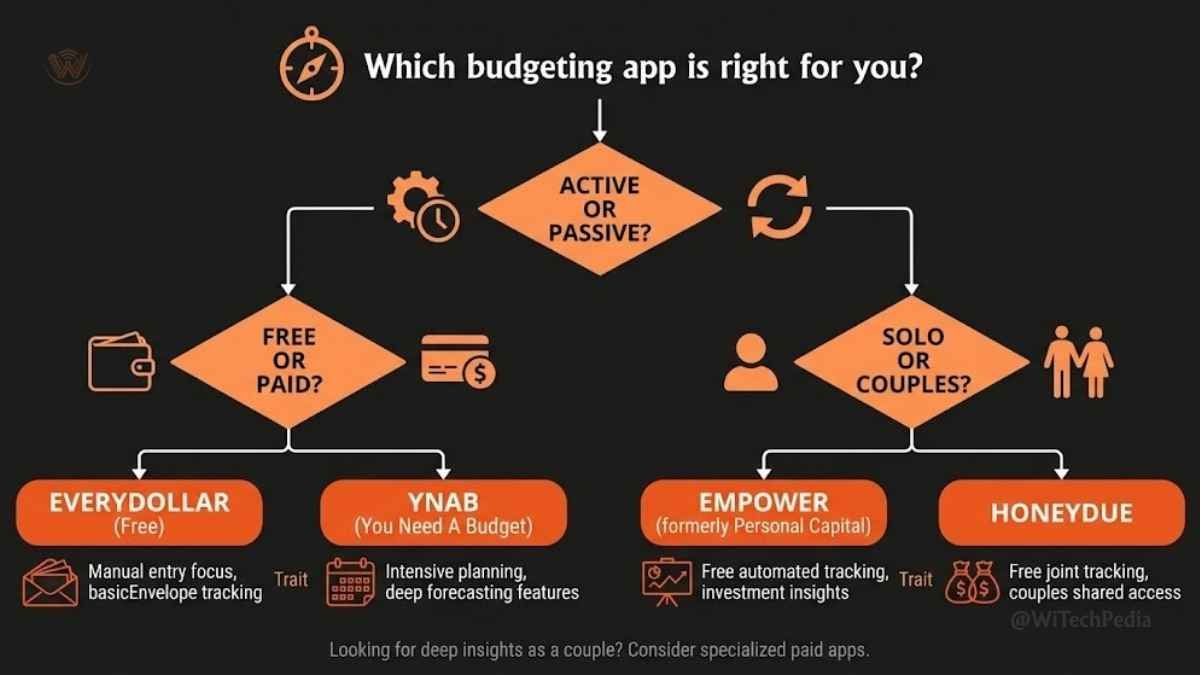
Before downloading anything, answer these three questions:
1. Do I want to actively manage money or passively track it? Active: YNAB, EveryDollar, Goodbudget. Passive: PocketGuard, Empower, Copilot Money.
2. Do I manage money alone or with a partner? Couples: Monarch Money, Honeydue. Solo: Any app on this list works well.
3. What’s my budget for a budgeting app? Free: Empower, Goodbudget (basic), Honeydue. Low-cost: Quicken Simplifi ($2.99/month). Premium: YNAB, Monarch Money, Copilot Money.
Are These Budgeting Apps Safe to Use?
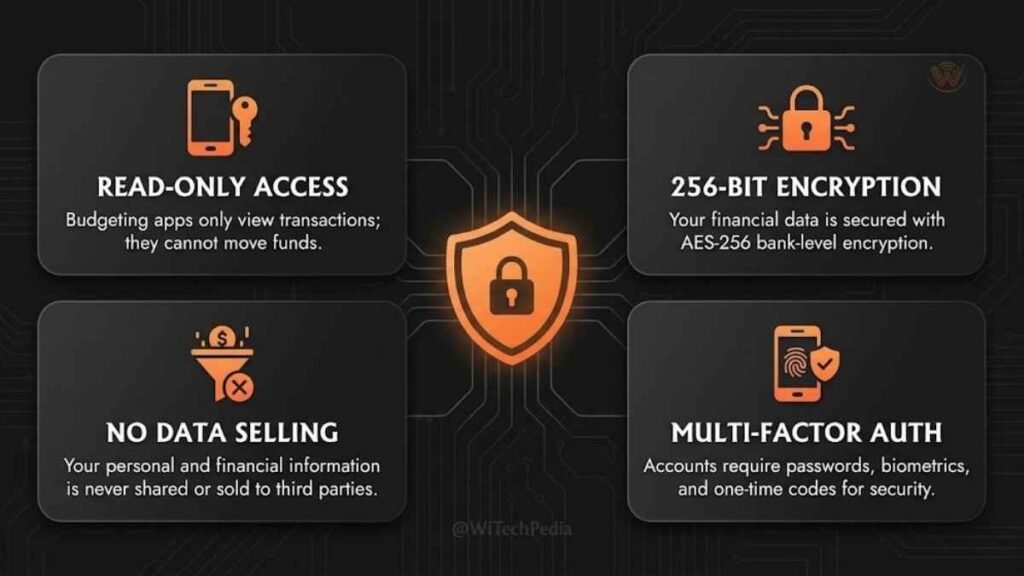
Security is a legitimate concern when connecting financial accounts to third-party apps. Here’s what the leading apps do to protect your data:
- Read-only access — Most apps connect via Plaid or similar aggregators. They can read transaction data but cannot move money.
- Bank-level encryption — 256-bit AES encryption is standard across all apps reviewed here.
- No data selling — Every app in this list explicitly states they do not sell user financial data to third parties.
- Multi-factor authentication — All premium apps support 2FA.
If you’re still uncomfortable with bank syncing, Goodbudget and EveryDollar (free) both offer fully manual entry options.
FAQ: Best App for Budgeting
What is the best free budgeting app in 2026?
The best free budgeting app in 2026 is Empower Personal Dashboard. It offers comprehensive expense tracking, investment portfolio analysis, net worth tracking, a retirement planner, and debt paydown tools — all at no cost. For couples specifically, Honeydue is the best free option for shared financial management.
Is YNAB worth paying for?
Yes, YNAB is worth paying for if you’re committed to changing your financial behavior. Users save an average of $600 in their first two months and over $6,000 in their first year. At $109/year, that’s a return of more than 55 times the subscription cost. The 34-day free trial lets you verify this before paying anything.
What happened to Mint? What should I use instead?
Mint shut down in March 2024 after Intuit decided to consolidate it into Credit Karma. The best replacement for Mint is Monarch Money, which offers a nearly identical feature set but with more customization, better investment tracking, and a collaborative mode for couples. Many former Mint users migrated to Monarch and found it a significant upgrade.
Can budgeting apps actually connect to my bank account securely?
Yes. The leading budgeting apps use read-only connections through secure aggregators like Plaid, MX, or Finicity. This means the app can read your transaction data but cannot transfer, withdraw, or move money in any way. All major apps reviewed here use 256-bit encryption and support multi-factor authentication. They are as secure as using your bank’s own mobile app.
What is the best budgeting app for beginners?
The best budgeting app for beginners is PocketGuard. Its “In My Pocket” feature reduces budgeting to a single number — how much you can safely spend right now — which eliminates the complexity that causes beginners to quit. EveryDollar (free version) is another strong beginner choice for those who want a guided, structured approach.
What is the best budgeting app for couples?
Monarch Money and Honeydue are the top choices for couples. Honeydue is free and built specifically for partners, with granular privacy controls. Monarch Money is the better choice if you want a full financial management platform — budgeting, investing, and goal tracking — that two people can share.
Does zero-based budgeting actually work?
Yes, zero-based budgeting is one of the most effective personal finance methods when applied consistently. The principle — assigning every dollar a specific purpose before spending it — forces intentional financial decisions rather than reactive ones. YNAB’s user data shows that people who commit to the method for 90 days build long-term financial discipline that persists even if they eventually stop using the app.
The Bottom Line: Take Control of Your Money in 2026
The best app for budgeting isn’t the one with the most features. It’s the one that fits how you actually think about money — and that you’ll still be using three months from now.
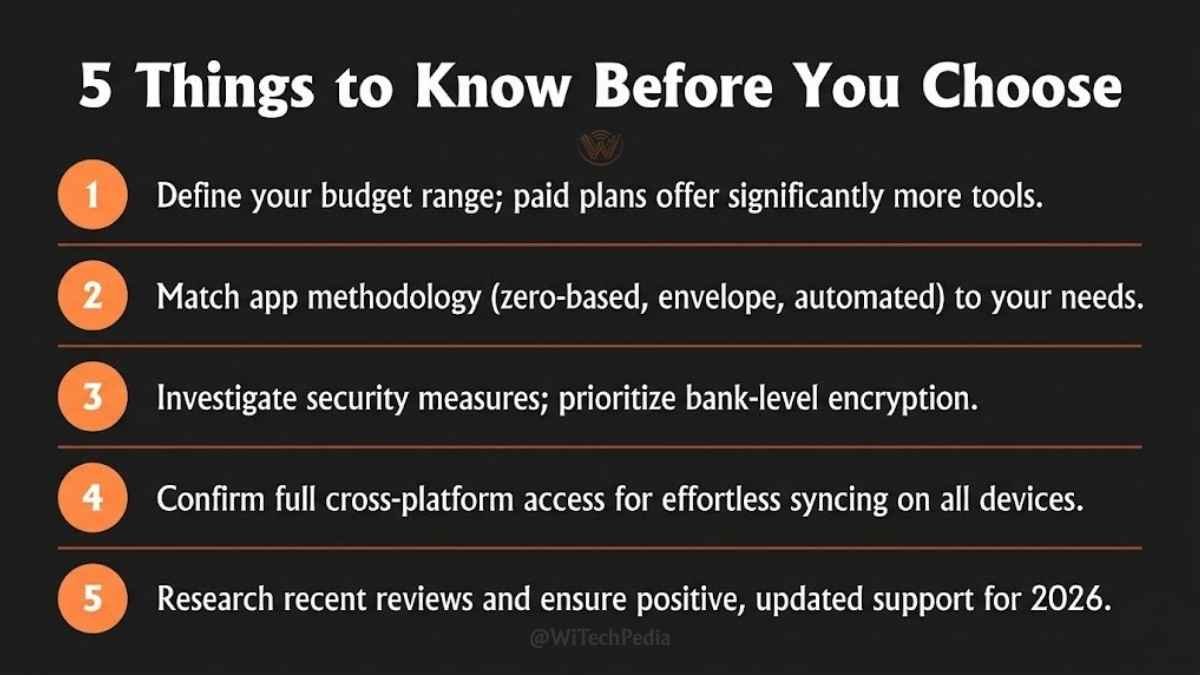
Here are the five key takeaways from this guide:
- Match the app to your philosophy. Active zero-based budgeters should use YNAB. Passive trackers should use Monarch Money or Empower.
- Free doesn’t mean limited. Empower and Honeydue offer genuinely powerful tools at zero cost.
- Security is not a valid reason to avoid these apps. All major budgeting apps use read-only bank access and bank-grade encryption.
- Mint is gone — Monarch Money is the best replacement. Don’t settle for an inferior alternative.
- Consistency matters more than the app itself. Any app on this list works if you use it. The best budget is the one you’ll actually maintain.
📬 Stay Ahead of the Tech Curve
Subscribe to the WiTechPedia Newsletter — weekly breakdowns of the tools, apps, and technologies that are worth your time. No fluff. No spam. Just genuine insight from people who test this stuff so you don’t have to.