










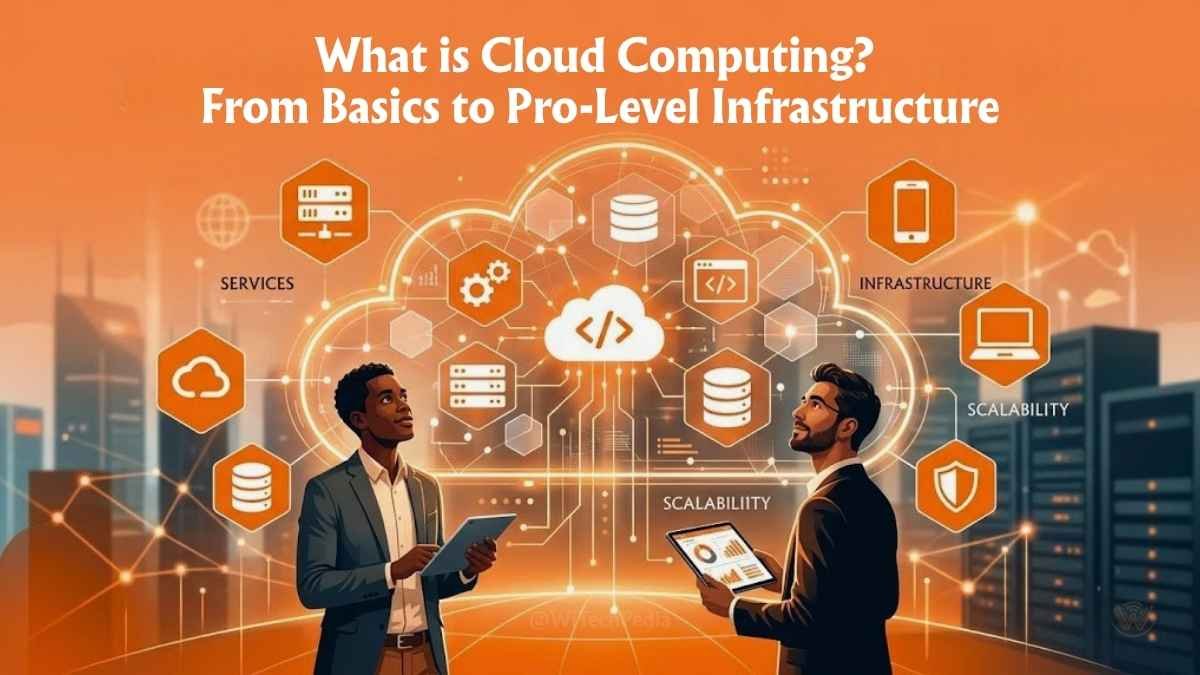
In 2026, the digital world is no longer confined to local hard drives and humming on-premise server rooms. Whether you are streaming a 4K video, deploying a machine learning agent, or simply managing your website’s traffic, you are relying on a vast network of remote servers. But what exactly is driving this seamless experience?
At its core, cloud computing is the delivery of computing services—including servers, storage, databases, networking, software, and analytics—over the internet. Instead of buying, owning, and maintaining physical data centers, you rent access to computing power from a provider on a pay-as-you-go basis. It is the invisible backbone of the modern internet, making high-level technology accessible to both beginners building their first blog and professionals managing complex digital infrastructures.
How Does the Cloud Work?
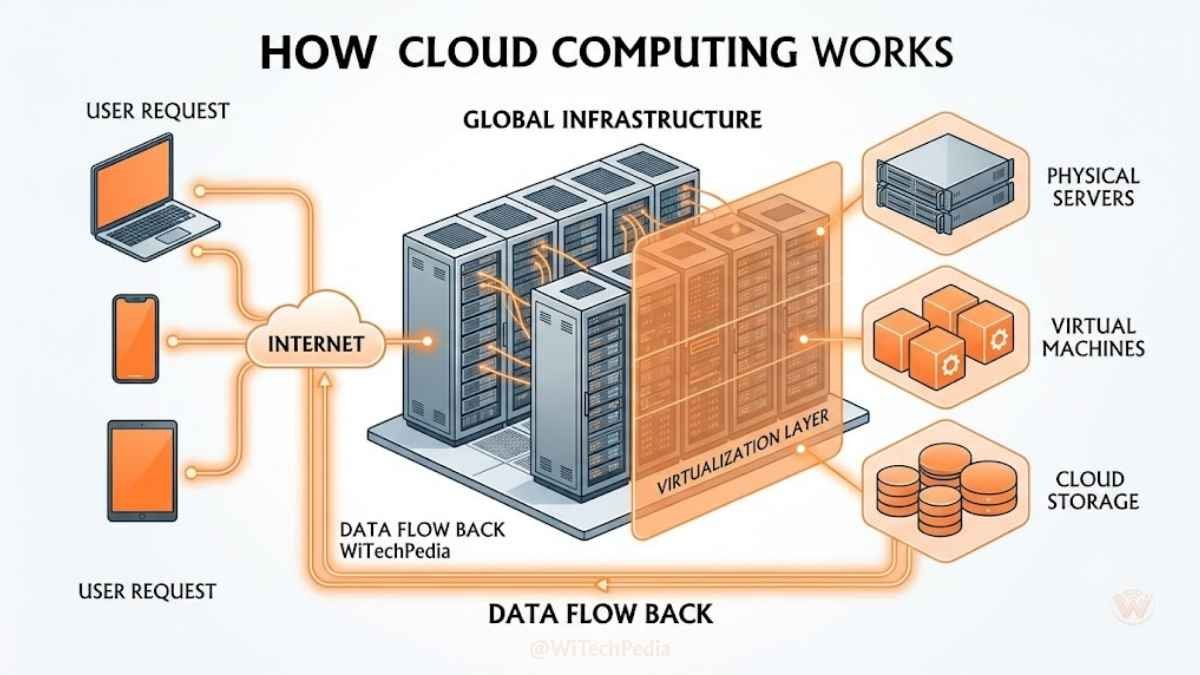
To understand how the cloud works, imagine you are renting a fully furnished apartment instead of building a house from the ground up. The infrastructure already exists. Massive data centers scattered across the globe house thousands of physical servers. Using virtualization technology, these physical servers are divided into multiple “virtual machines.”
When you access cloud computing services, you are tapping into these virtual machines via a secure internet connection. The provider manages the hardware, security updates, and cooling systems, while you focus purely on building, deploying, or utilizing your software.
Types of Cloud Computing Services
Not all clouds are built the same. As a developer or business owner, selecting the right cloud infrastructure is critical to your operational success. Cloud services generally fall into three distinct models.
IaaS vs. PaaS vs. SaaS Differences
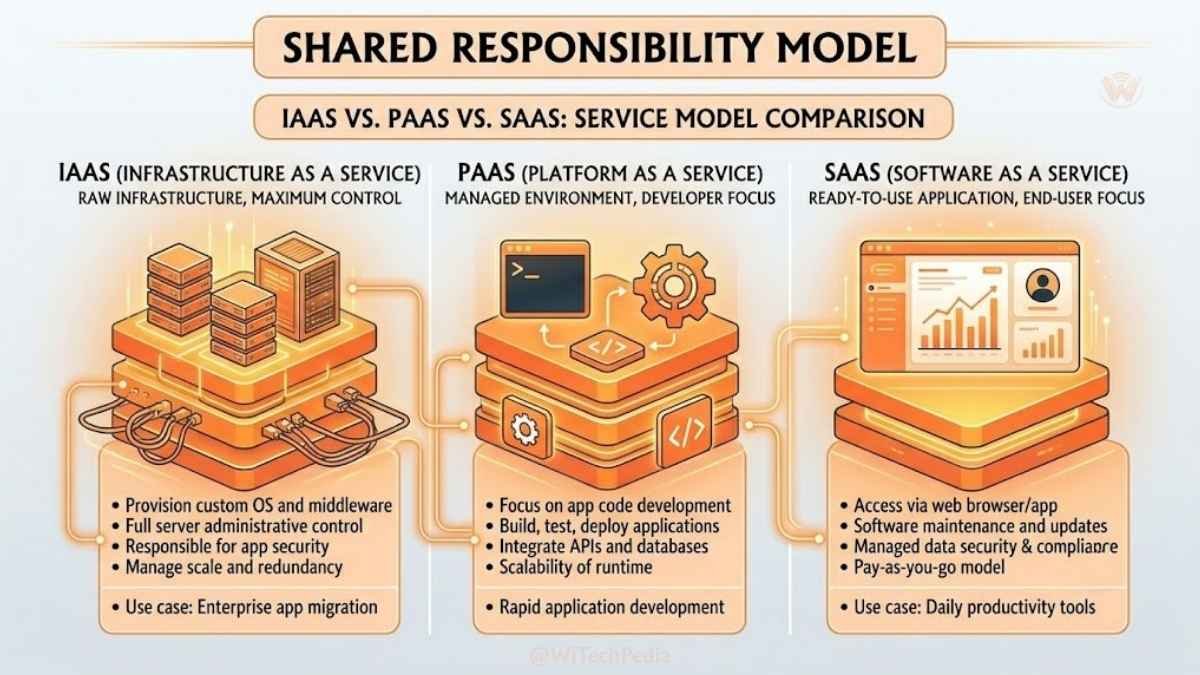
Understanding these models is the first step in any successful enterprise cloud migration. Here is how they compare:
| Service Model | What It Provides | Best For | Real-World Examples |
| IaaS (Infrastructure as a Service) | Raw computing resources (virtual servers, network, storage). Maximum control. | System admins, DevOps engineers, and full-stack developers. | Amazon Web Services (AWS) EC2, Google Cloud. |
| PaaS (Platform as a Service) | A managed environment to build and deploy apps without worrying about underlying servers. | Developers who want to focus strictly on writing code. | GitHub Codespaces, Heroku, AWS Elastic Beanstalk. |
| SaaS (Software as a Service) | Fully functional, ready-to-use applications delivered directly via the web browser. | End-users, marketers, and everyday consumers. | Canva Pro, Mailchimp, Microsoft Clarity, Rank Math Premium. |
The Core Benefits of Cloud Computing
Why has the entire tech industry migrated to the cloud? The advantages go far beyond simple file storage.

- Unmatched Scalability: Scale your resources up during traffic spikes and down during quiet periods. You only pay for what you consume.
- Global Accessibility: Your digital workspace is available from anywhere with an internet connection, breaking down geographic barriers for remote teams.
- Cost Efficiency: Eliminate the massive upfront capital expenses of buying hardware, running power, and hiring 24/7 onsite IT staff.
- Rapid Deployment: Provisioning a server takes minutes, not weeks. This allows for rapid testing and innovation, particularly when deploying advanced AI and Machine Learning models.
- Enhanced Security: Leading providers invest billions in cybersecurity principles, offering robust data encryption, automated backups, and disaster recovery out of the box.
Frequently Asked Questions (FAQ)
What is the difference between cloud storage vs cloud computing?
Cloud storage is a specific, limited service designed purely for saving and retrieving files (like Google Drive or Dropbox). Cloud computing is a much broader concept that involves actively running applications, databases, and processing power on remote servers.
Who are the top cloud service providers in 2026?
The market is currently dominated by a “Big Three” oligopoly: Amazon Web Services (AWS), Microsoft Azure, and Google Cloud Platform (GCP). They provide the vast majority of enterprise-grade cloud infrastructure worldwide.
Is cloud computing secure?
Yes, inherently. Major providers employ state-of-the-art encryption, biometric physical security at data centers, and continuous threat monitoring. However, security is a shared responsibility; users must still enforce strong passwords, configure their databases correctly, and manage access permissions.
What are common cloud computing examples we use daily?
Almost every modern digital convenience is a cloud computing example. Streaming movies on Netflix, editing documents in Google Docs, using mobile banking apps, or optimizing website images through plugins like Imagify all rely on cloud infrastructure.
How do I start learning about cloud infrastructure?
Begin by experimenting with free tiers offered by major providers. Spin up a basic WordPress site using a micro-instance on AWS EC2 or Google Cloud, and familiarize yourself with the console. Pair practical experimentation with official documentation.
The Future of Cloud Infrastructure and You
The cloud is no longer an emerging trend; it is the default operating model of the digital world. Whether you are launching a scalable digital product, testing a custom Node.js script, or optimizing your SEO workflow, the cloud provides the canvas for your innovation.
Key Takeaways:
- Cloud computing eliminates physical hardware limitations by delivering on-demand computing power over the internet.
- The three main service models (IaaS, PaaS, SaaS) offer varying levels of control, catering to everyone from sysadmins to casual consumers.
- Scalability, cost-efficiency, and rapid deployment are the primary drivers behind global cloud adoption.
- Security is robust, but operates on a shared responsibility model.
Ready to dive deeper into the tools that power the web? Explore our comprehensive Software & Tools on WITechPedia to discover the best platforms for your next project, and don’t forget to subscribe to our newsletter for weekly insights straight to your inbox!