









One AI model. One day. A migration that would have taken a human engineering team over two months. That is not a marketing claim — it is what Stripe reported after testing Claude Fable 5 in a 50-million-line Ruby codebase.
On June 9, 2026, Anthropic released Claude Fable 5, the first publicly available model in the Mythos class — a tier of AI capability that was, until just weeks ago, locked behind government-level clearance. The launch marks a turning point not just for Anthropic, but for what we expect AI to actually do in the real world.
- What Is Claude Fable 5? Understanding the Mythos-Class Model
- The Road to Fable: How Mythos Came to Exist
- Claude Fable 5 Benchmarks: The Numbers That Matter
- Claude Mythos 5: The Unrestricted Frontier
- Real-World Use Cases: What Fable 5 Actually Does for You
- Claude Fable 5 Pricing and Availability
- Safety Architecture: How Anthropic Made Mythos-Class AI Safe for General Use
- Fable 5 vs. The Competition
- FAQ: Claude Fable 5 and Mythos 5
- The Bottom Line: Claude Fable 5 Redefines What AI Can Do
This is not another incremental update. After Claude Code Leak, Claude Fable 5 is a fundamental redefinition of what an AI model can accomplish: sustained, autonomous, multi-day work across software engineering, scientific research, knowledge-intensive tasks, and vision — all with safety guardrails engineered to make it broadly usable without becoming a tool for harm.
In this guide, we break down everything you need to know about Claude Fable 5, Claude Mythos 5, their real-world performance, pricing, availability, and what they mean for developers, enterprises, and the broader AI landscape.
What Is Claude Fable 5? Understanding the Mythos-Class Model
Claude Fable 5 is Anthropic’s most capable publicly available AI model, launched on June 9, 2026. It belongs to the Mythos class — a new tier of Claude models that sit above the Opus class in both capability and architectural ambition.
The name itself carries meaning. Fable derives from the Latin fabula (“that which is told”), which is etymologically akin to the Greek mythos. Anthropic chose these names deliberately: Fable is the publicly accessible variant; Mythos is the unrestricted, government-partnered version.
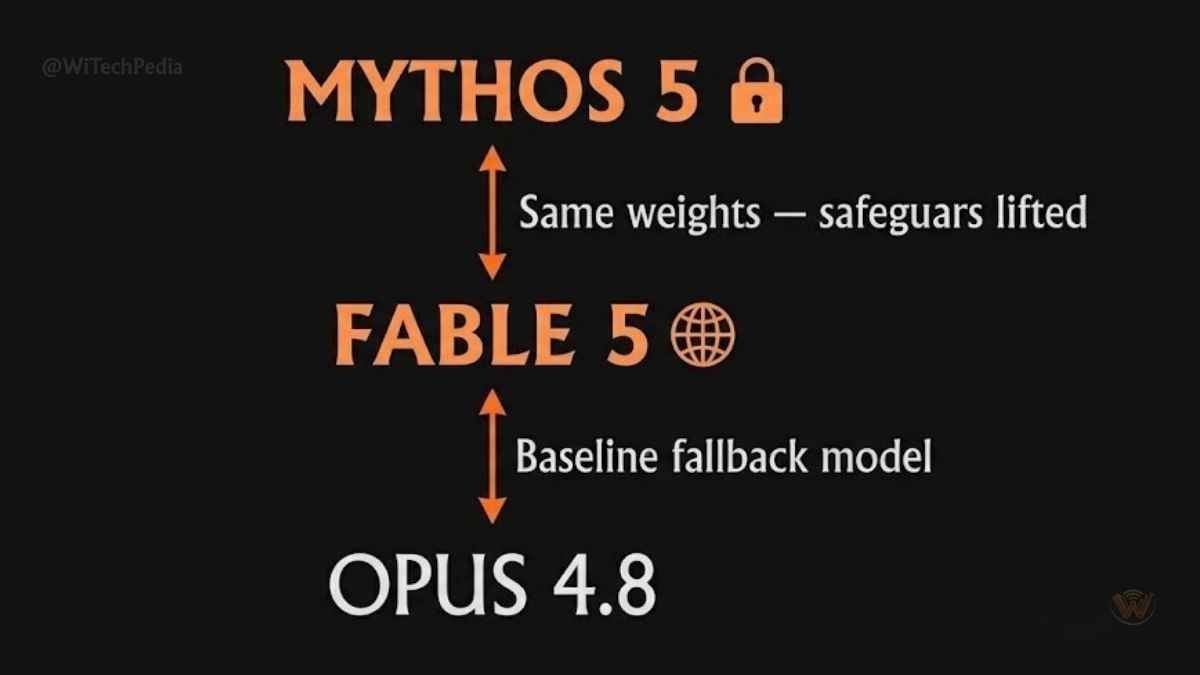
The key distinction between the two is safeguards, not underlying capability. Both Fable 5 and Mythos 5 share the same foundational model weights. What separates them is a layer of conservative safety filters applied to Fable 5 that block or redirect queries in high-risk domains — including cybersecurity, biology, chemistry, and certain synthesis instructions — to Claude Opus 4.8 instead.
Mythos Class vs. Opus Class: What Changed?
| Feature | Claude Opus 4.8 | Claude Fable 5 | Claude Mythos 5 |
|---|---|---|---|
| Model class | Opus | Mythos (public) | Mythos (restricted) |
| Availability | All subscribers | Pro, Max, Team, Enterprise | Project Glasswing / trusted orgs only |
| SWE-Bench Pro score | ~70% | 80.3% | 80.3% |
| FrontierCode Diamond | 13.4% | 29.3% | 29.3% |
| Hex Analytics benchmark | — | First to exceed 90% | First to exceed 90% |
| Cybersecurity safeguards | Standard | Conservative (fallback to Opus 4.8) | Lifted (full capabilities) |
| Input token price | $5/M | $10/M | $10/M |
| Output token price | $25/M | $50/M | $50/M |
| Long-horizon agentic tasks | Limited | ✅ Purpose-built | ✅ Purpose-built |
Key takeaway: Fable 5 outperforms Opus 4.8 by more than 10% across most benchmarks. It is the first model Anthropic has built explicitly for ambitious, multi-day, asynchronous agentic work.
The Road to Fable: How Mythos Came to Exist
To understand Claude Fable 5, you need to understand what came before it.
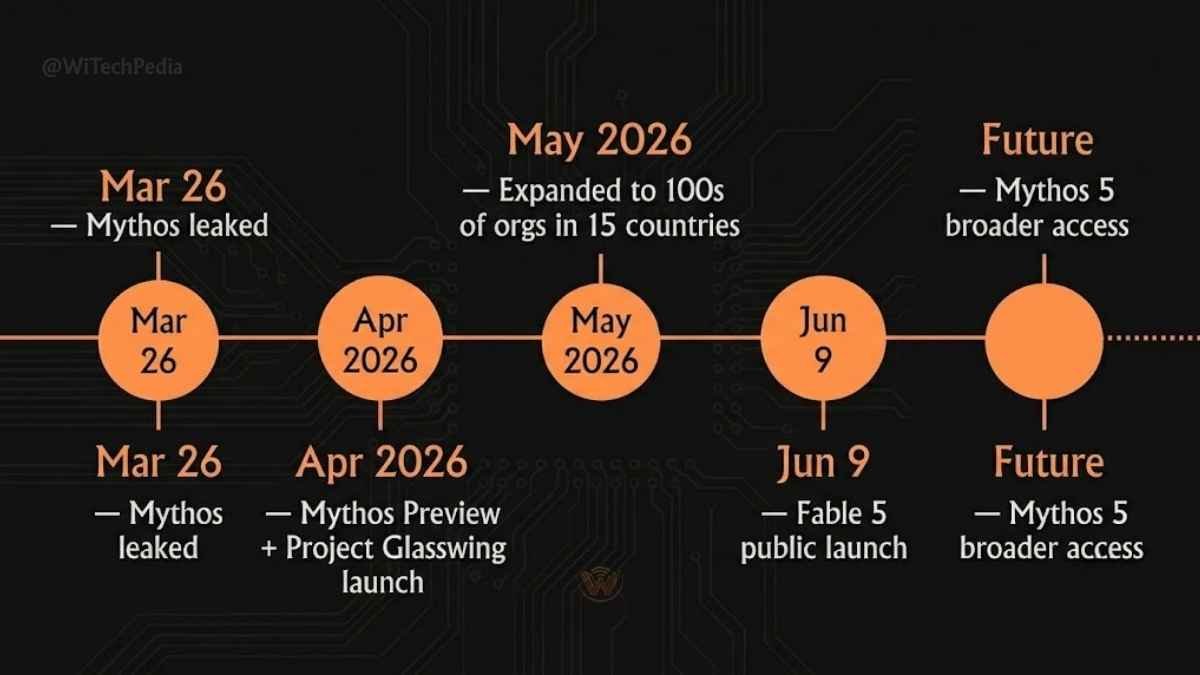
In April 2026, Anthropic unveiled Claude Mythos Preview through a highly selective program called Project Glasswing — a collaboration with the U.S. government and critical infrastructure providers. The model was never released publicly. Why? Because internal evaluations showed that Mythos-class models could find and exploit software vulnerabilities at a level that raised serious misuse concerns.
The existence of the Mythos model had actually leaked publicly on March 26, 2026, when draft blog posts were discovered, fueling enormous anticipation. Prediction markets gave a 94% probability that a public release would happen by June. Anthropic delivered — on June 9, exactly.
The path from restricted preview to public availability was made possible by engineering new safety-tuned safeguards: behavioral filters that intercept queries in specific high-risk categories and route them to a safer model, without degrading the experience for the vast majority of use cases. Anthropic reports that these safeguards trigger in less than 5% of sessions, meaning over 95% of Fable 5 interactions run entirely on the model’s full capabilities.
Claude Fable 5 Benchmarks: The Numbers That Matter
Software Engineering
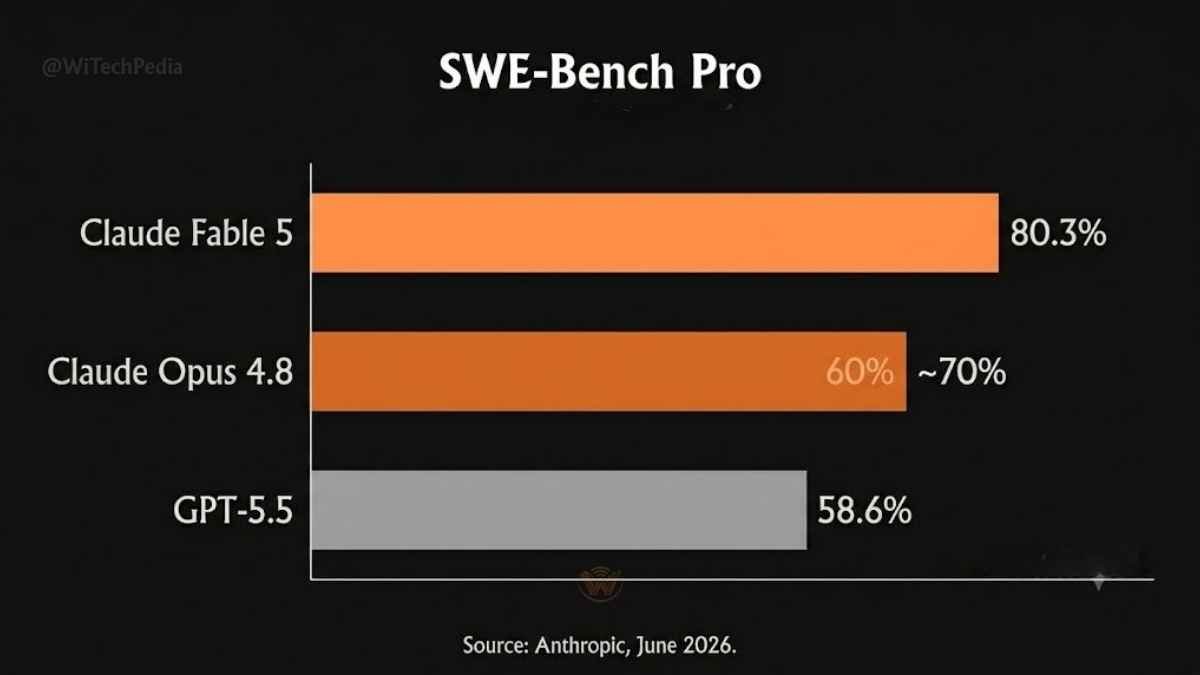
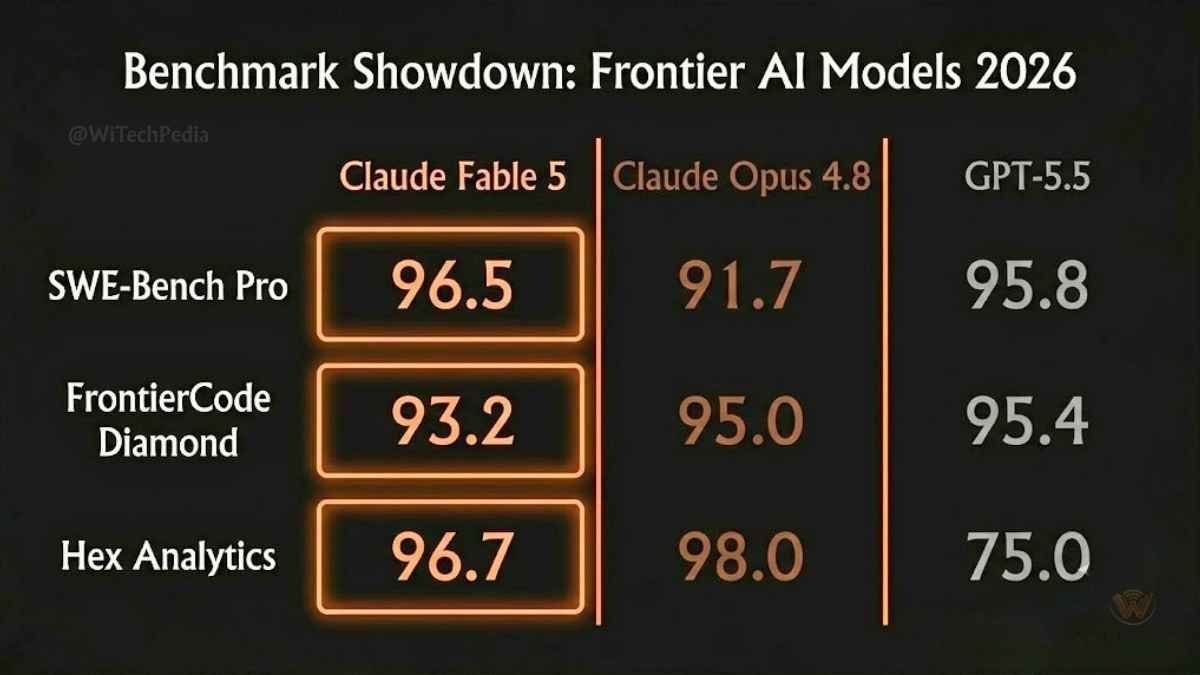
Claude Fable 5 scored 80.3% on SWE-Bench Pro, a rigorous evaluation of a model’s ability to complete difficult, real-world software engineering tasks. For context, OpenAI’s GPT-5.5 scored 58.6% on the same benchmark.
On Cognition’s FrontierCode Diamond benchmark — which measures high-quality, production-grade agentic coding — Fable 5 scored 29.3%, compared to 13.4% for Opus 4.8 and just 5.7% for GPT-5.5.
Critically, Fable 5 achieves its highest FrontierCode score even at medium reasoning effort, suggesting it delivers top-tier results without always burning maximum compute — a meaningful efficiency advantage.
Real-world proof: Stripe deployed Fable 5 against a 50-million-line Ruby codebase. The model completed a codebase-wide migration in one day — a job that would have taken a full human engineering team over two months by hand.
Knowledge Work
Fable 5 achieved the highest score of any frontier model on Hebbia’s Finance Benchmark for senior-level reasoning — with notable gains in document-based reasoning, chart and table interpretation, and analytical problem solving.
IMC, a quantitative trading firm, reported that Fable 5 “aced their trading-analysis evaluations nearly across the board,” including factual lookup, conceptual reasoning, root-cause analysis, and expected-value analysis.
Vision
Fable 5 is now the state-of-the-art model for vision tasks. It can extract precise data from dense scientific figures, and can rebuild a web app’s source code from screenshots alone — without additional tooling.
Perhaps the most striking demo: previous Claude models required complex helper harnesses to play Pokémon FireRed. Fable 5 completed the game using vision only — raw game screenshots, no maps, no navigation aids.
Memory and Long-Context
In long-running agentic tasks, Fable 5 stays coherent across millions of tokens. When tested on the deck-building game Slay the Spire, giving Fable 5 access to persistent file-based memory improved its performance three times more than the same setup improved Opus 4.8’s performance. Fable 5 also reached the game’s final act three times more often.
Claude Mythos 5: The Unrestricted Frontier
Claude Mythos 5 is the same underlying model as Fable 5 — but with its safeguards partially or fully lifted in specific high-risk domains. It is currently deployed exclusively through Project Glasswing, Anthropic’s collaboration with the U.S. government and select critical infrastructure organizations, as an upgrade to Claude Mythos Preview.
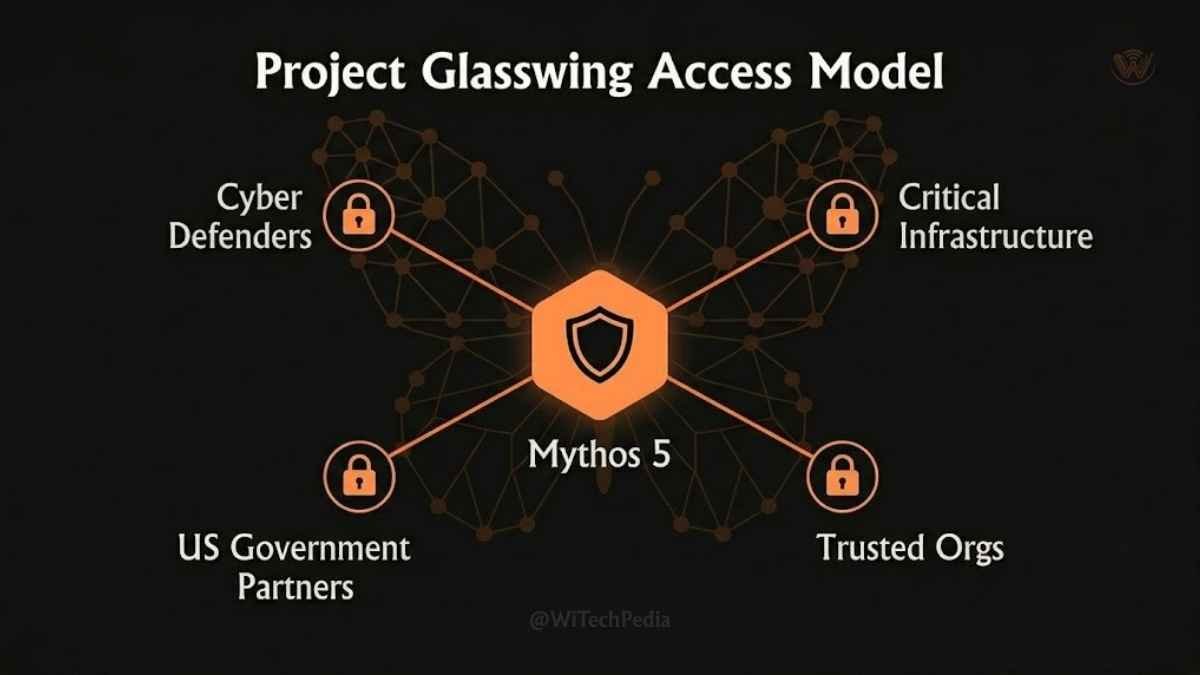
The distinction matters enormously:
- Fable 5 is built for general enterprise use with conservative guardrails.
- Mythos 5 is built for cyber defenders and critical infrastructure providers who need the model’s full capabilities without the safety fallbacks.
Mythos 5 holds the title of the strongest cybersecurity AI model in the world. Anthropic plans to expand access to Mythos 5 through a broader trusted access program in the coming months.
Life Sciences: Where Mythos 5 Changes Everything
Beyond cybersecurity, Mythos 5 is producing genuinely groundbreaking results in scientific research:
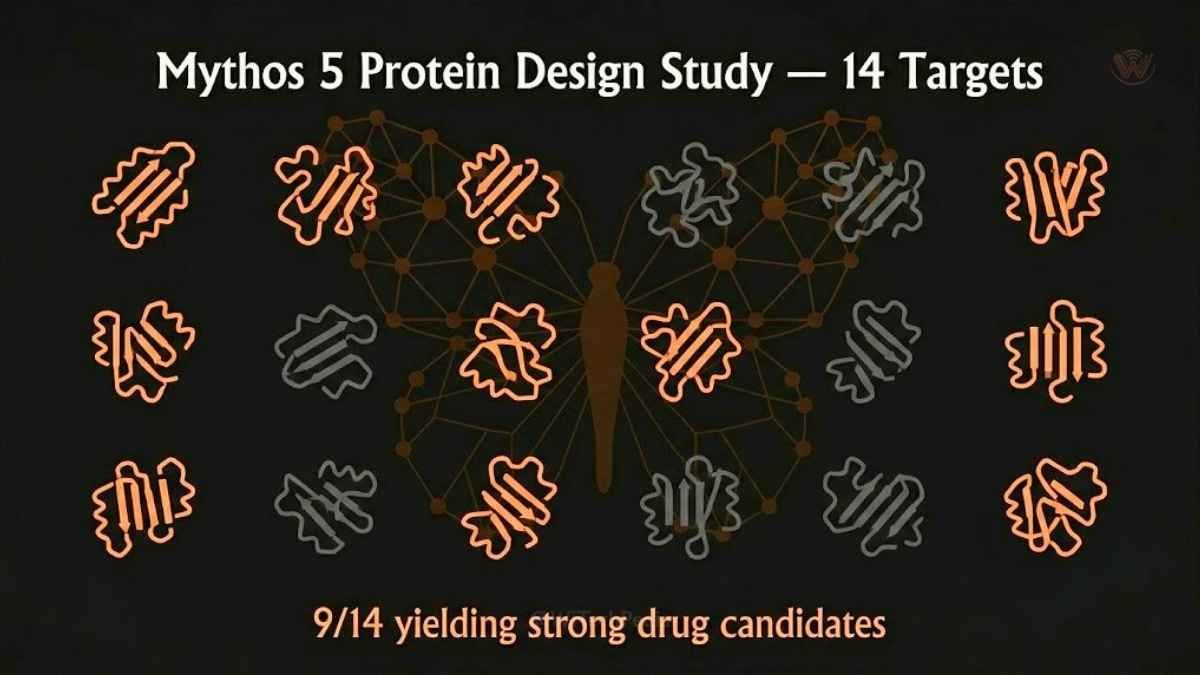
Drug design. Anthropic’s internal protein design experts used Mythos 5 to accelerate aspects of the drug design process by roughly ten times. Operating with protein design and bioinformatics tools but without human assistance, the model completed all tasks normally done by a scientist: choosing binding sites, selecting and running protein design tools, and recovering from failures. Nine of 14 protein targets yielded strong drug design candidates currently under investigation.
Novel scientific hypotheses. Mythos 5 is Anthropic’s first model to consistently generate novel, compelling scientific hypotheses. In blinded head-to-head comparisons against Opus-class models, Anthropic scientists preferred Mythos 5’s molecular biology hypotheses ~80% of the time. One Mythos hypothesis — a novel mechanism for an E. coli protein — was independently corroborated by a separate research lab working on the same problem.
Genomics research. Over a week of largely autonomous work, Mythos 5 assembled single-cell data for millions of cells across 138 animal species, designed and trained a custom machine learning model to identify functionally equivalent cells across distantly related organisms. Its trained model outperformed a recently published Science journal model — while being 100 times smaller.
Real-World Use Cases: What Fable 5 Actually Does for You
1. Enterprise Software Engineering
Large-scale codebase migrations, multi-week refactoring projects, and autonomous code review pipelines. Cursor’s CEO called Fable 5 state-of-the-art on CursorBench, noting it “opened up a class of long-horizon problems that were out of reach for earlier models.”
You May Also Like

2. Legal Document Analysis
In blind review by lawyers, Fable 5’s contract redlines matched or beat the performance of their existing specialized model every single time.
3. Financial Analysis
IMC’s trading-analysis evaluations were passed “nearly across the board” — including complex expected-value and root-cause analysis tasks that require genuine domain expertise.
4. Vibe Coding and Rapid Prototyping
Platform Base44 noted that Fable 5 is better at “one-shotting full apps” with excellent tool-calling. Genspark reported Fable 5 outperformed every other model on UI design and game coding tasks.
5. Scientific Research Acceleration
With Mythos 5, Anthropic’s scientists compressed months of genomics work into days, and accelerated protein drug design by 10x — pointing toward a future where AI is a genuine peer collaborator in the lab.
Claude Fable 5 Pricing and Availability
Pricing
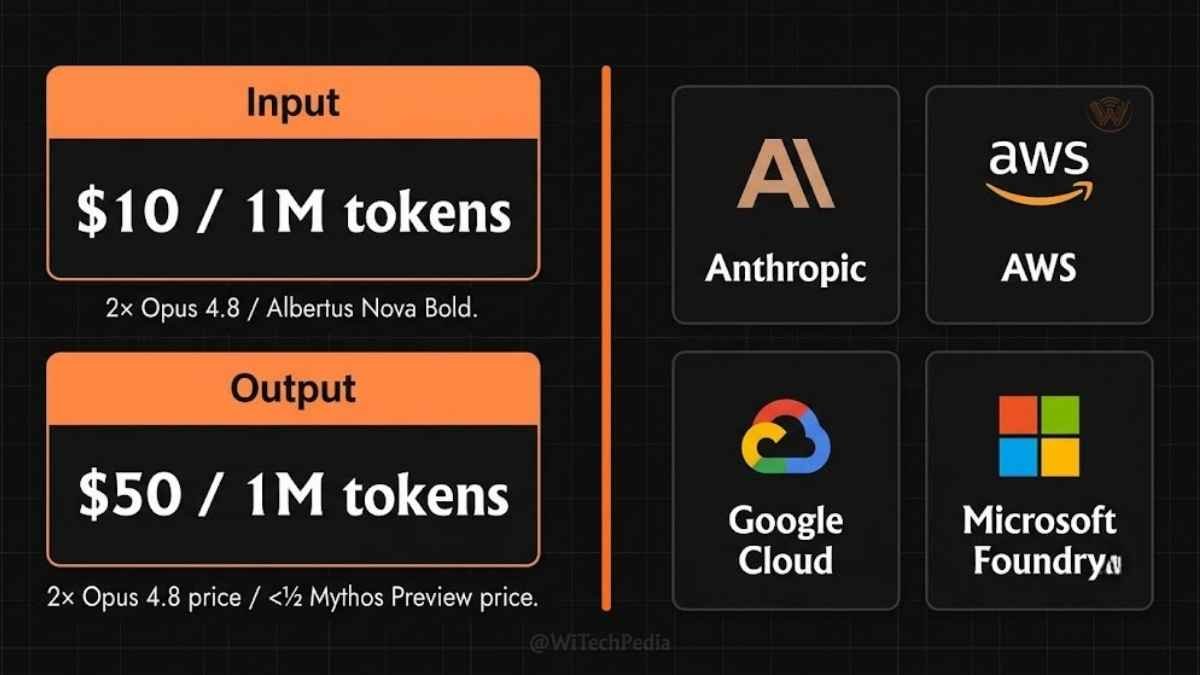
Both Claude Fable 5 and Claude Mythos 5 are priced at:
- Input: $10 per million tokens
- Output: $50 per million tokens
This is double the price of Claude Opus 4.8 ($5 input / $25 output), but represents less than half the price of the original Claude Mythos Preview.
Subscription Access
Anthropic is rolling out Fable 5 access in stages:
- Through June 22, 2026: Included at no extra cost in Pro, Max, Team, and seat-based Enterprise plans.
- From June 23, 2026: Fable 5 will require usage credits on those plans.
API & Platform Availability
Claude Fable 5 is available via:
- Anthropic Claude Platform
- Amazon Web Services (AWS)
- Google Cloud
- Microsoft Foundry
Safety Architecture: How Anthropic Made Mythos-Class AI Safe for General Use
The challenge Anthropic faced was real: Mythos-class models are powerful enough that unrestricted access creates meaningful risks — particularly in cybersecurity, where the models can find and exploit vulnerabilities in ways that could cause serious damage.
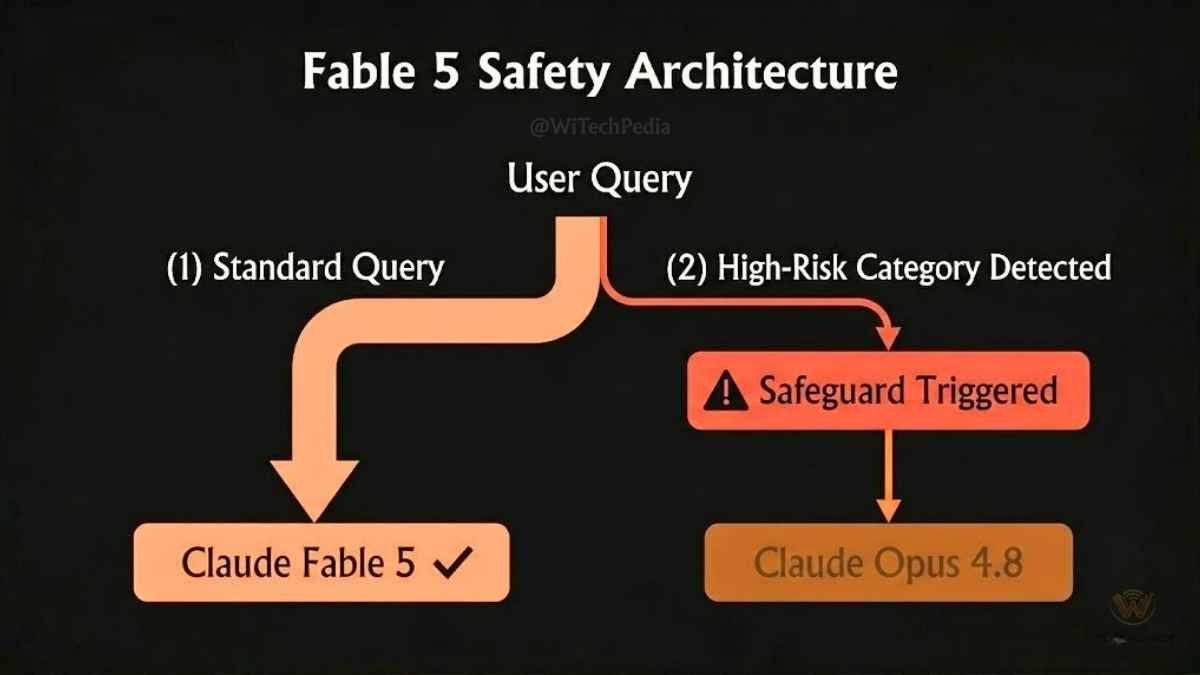
The solution was a conservative safeguard layer that:
- Monitors queries in real-time for high-risk content categories.
- Redirects those queries to Claude Opus 4.8 for a safer response.
- Triggers in less than 5% of sessions on average — meaning nearly all user interactions remain on Fable 5.
Anthropic acknowledges the safeguards are tuned conservatively for launch, and will sometimes catch harmless requests. The plan is to improve precision and reduce false positives as better safeguard techniques become available.
On alignment, automated assessment showed Mythos 5’s level of misaligned behavior (including deception and cooperation with misuse) was low, and similar to Opus 4.8 — a reassuring result for a model of this capability level. The full system card is publicly available.
Fable 5 vs. The Competition
| Model | SWE-Bench Pro | FrontierCode Diamond | Input Price/M tokens | Output Price/M tokens |
|---|---|---|---|---|
| Claude Fable 5 | 80.3% | 29.3% | $10 | $50 |
| Claude Opus 4.8 | ~70% | 13.4% | $5 | $25 |
| OpenAI GPT-5.5 | 58.6% | 5.7% | — | — |
Fable 5’s lead over GPT-5.5 on SWE-Bench Pro (80.3% vs. 58.6%) is not marginal — it is a 21.7 percentage point gap on one of the most technically demanding benchmarks in AI evaluation.
FAQ: Claude Fable 5 and Mythos 5
What is the difference between Claude Fable 5 and Claude Mythos 5?
Claude Fable 5 and Claude Mythos 5 share the same underlying model architecture and weights. The key difference is safeguards: Fable 5 includes conservative safety filters that redirect high-risk queries (in areas like cybersecurity, biology, and chemistry) to Claude Opus 4.8. Mythos 5 has those safeguards lifted in certain domains and is currently available only to vetted organizations through Project Glasswing.
What is Project Glasswing?
Project Glasswing is Anthropic’s restricted access program, developed in collaboration with the U.S. government, for deploying Mythos-class AI capabilities to cyber defenders and critical infrastructure providers. It was first announced in April 2026 when Claude Mythos Preview launched. Mythos 5 is the latest model deployed through this program. Learn more at anthropic.com/glasswing.
How does Claude Fable 5 compare to GPT-5.5?
On SWE-Bench Pro — a rigorous software engineering benchmark — Claude Fable 5 scored 80.3% compared to GPT-5.5’s 58.6%, a gap of over 21 percentage points. On FrontierCode Diamond, Fable 5 scored 29.3% vs. GPT-5.5’s 5.7%. Across currently available benchmarks, Fable 5 holds state-of-the-art status.
Is Claude Fable 5 available on the free plan?
As of launch (June 9, 2026), Fable 5 is available to paid subscribers on Pro, Max, Team, and Enterprise plans. Access on those plans is included at no extra cost through June 22, 2026. From June 23 onward, Fable 5 will require usage credits. It is not currently available on the free Claude tier.
What happens when Claude Fable 5 encounters a high-risk query?
When Fable 5’s safeguards detect a query in a blocked category (such as cybersecurity exploits, biological synthesis routes, or similar high-risk topics), the model redirects the query to Claude Opus 4.8, which delivers a safe response. According to Anthropic, this fallback triggers in fewer than 5% of sessions, meaning the vast majority of users never encounter it.
Can Claude Fable 5 work autonomously for multi-day tasks?
Yes — this is one of its defining capabilities. Fable 5 was purpose-built for long-horizon, asynchronous agentic tasks. It can sustain focus across millions of tokens, leverage persistent file-based memory, and improve its own outputs through iterative self-review. Stripe’s two-month-in-one-day migration is the clearest real-world demonstration of this capability.
The Bottom Line: Claude Fable 5 Redefines What AI Can Do
Claude Fable 5 is not just Anthropic’s most powerful model — it is the first publicly available AI that was built explicitly for the kind of ambitious, sustained, autonomous work that actually moves the needle in enterprise environments, research labs, and developer workflows.
Here are the top takeaways:
- Mythos class is now public. Fable 5 brings capability that was previously locked behind government-level programs to any enterprise or paid subscriber.
- Benchmark dominance. 80.3% on SWE-Bench Pro, 29.3% on FrontierCode Diamond, first to exceed 90% on Hex Analytics — the numbers are not close.
- Purpose-built for agentic AI. Sustained multi-day tasks, persistent memory, long-context coherence — Fable 5 was designed for work that previous models could not sustain.
- Safety-first architecture. Conservative safeguards ensure broad usability without opening the door to high-risk misuse, with less than 5% of sessions affected.
- Scientific potential. With Mythos 5, Anthropic is already producing drug design candidates, novel genomics models, and independently-corroborated molecular biology hypotheses.
The era of AI as a collaborator — not just a tool — is arriving faster than most anticipated. Claude Fable 5 is the clearest proof yet.
📬 Stay Ahead of AI
Subscribe to the WiTechPedia Newsletter for weekly deep dives on AI models, agentic systems, and the technology shaping the next decade. No fluff — just expert analysis you can use.
→ Related Reading on WiTechPedia: